Archive for January, 2014

Dear poetry newbies: “why is my work always rejected?”

Monday, January 20th, 2014
A version of this post first appeared at One Night Stanzas in November 2008.

1. The standard isn’t high enough.
And by this I just mean that your poems aren’t “fit” for publication yet… but not that they never will be! If you’re sending out first drafts, poems that have only been hastily redrafted or edited, or poems that even you don’t think are all that amazing, then it might well be that you haven’t done quite enough to catch the eye of an editor. It’s easy to write a poem and then be overcome by a fervent desire to get it sent out immediately, but resist! Never send first drafts, and always devote a good chunk of time to redrafting and editing your chosen pieces. If possible, put them away for a while (a week, two weeks…) and then come back to them. And never send anything you’re not sure about. Work on it til you ARE sure about it, or send something else.
(NB: One of the best ways to get your poetry up to publication standard is to read the stuff that poetry magazines actually do publish - and if you can get hold of a copy of the specific magazines you want to submit to, even better!)

2. You’re not following the submission guidelines properly.
Some editors are happy to chuck a submission onto the slush pile for the slightest thing, so it’s always important to read and follow the submission guidelines carefully. Make sure you do everything according to the guidelines wherever you can; it can be a total pain, but it can also make the difference between acceptance and rejection. And don’t assume that one magazine’s guidelines apply to all! Read everyone’s guidelines, and follow them every time!

3. You commit minor - but deadly! - submission crimes.
A lot of poets reckon they can get away with sending the same four poems in the same email round to a whole load of editors at the same time - don’t do it! This suggests to editors that you don’t really care who picks up your poems or whether they’re published simultaneously. You also shouldn’t send “speculative” emails out before sending a submission. It may seem like politeness, but if an editor receives an email saying “check out my website and then maybe I’ll submit later”, they’re going to think a) you’re arrogant and b) you haven’t read their guidelines. Just put your submission together and send it! And don’t send snotty or pushy emails to editors until at least three months (yes, really, I’m afraid!) after the date you sent your submission. If you haven’t had a reply, there’s probably a reason, and going “oi, what are you messing about at?” after only a week or so is not going to make you any friends. Basically, when it comes to submissions, put in the work, follow the rules and be patient - that’s all there is to it!

4. Your cover letter needs a rewrite.
Have a good look at your cover letter (if you have one! If you don’t - write one!) and see if there are any of these common mistakes in it: heaps of biographical information (3 - 4 lines should do it); anything that could be interpreted as dishonest or boastful (”my work has appeared in 300 journals worldwide,” or the like); excessive negativity (”you’ll probably just reject me, but…”) anything that criticises or questions the publication or editor you’re writing to (”I found your website really hard to navigate” — keep it to yourself for now!); and of course, typos, grammatical errors or any unnecessary rambling! Exorcise all these things! It may leave your cover letter very short, but a couple of lines is all you need.

5. You’re submitting to the wrong magazines.
There are a lot of creative writing magazines out there and most of them are open for submissions for at least part of each year… so technically, you can submit to any of them. However, if you’re new to the whole submitting thing (or even if you aren’t!), it can be hard to know which are the best to choose. The sad fact is that a lot of editors are wary of publishing people who have never been published before, but fortunately, there are more and more magazines out there whose mission-statement is to provide as many writers as they can with their first publication opportunity. Many others specify that they welcome “unknown” or “emerging” writers, and you’re probably better off submitting to these if you can. You do get “unknown” writers in, say, Poetry Review, but if you want to give yourself the best chance of being accepted, it’s better to walk before you run, as they say!

6. You’re not ready to publish yet.
Only you can really know whether or not you’re ready to publish, but if you’re trying to get your work out there and the rejections are getting you down in a big way, then maybe you’re not 100% ready for the submission process. This might be hard to accept, but it’s better to wait until you’re better prepared than to make yourself suffer every time one of those pesky rejection letters lands in your mailbox. Give yourself six months, even a year. Spend that time writing - and more importantly, reading! - and then try getting back on the horse. You might find you still feel the same and need more time… if so, no worries. Or you might suddenly find that there’s the odd acceptance letter among those rejections; or that the rejections don’t bother you so much. Either way, the “time off” will have been well spent!

*

Like shiny things? Check out Edinburgh Vintage, a totally unrelated ’sister site’ full of jewels, treasures and trinkets. If you want to get in touch you can follow OneNightStanzas on Twitter, or email claire[at]onenightstanzas.com. I reply as swiftly as I can!
(Photo credit)

Things I Love Thursday #88: Edinburgh details

Thursday, January 16th, 2014

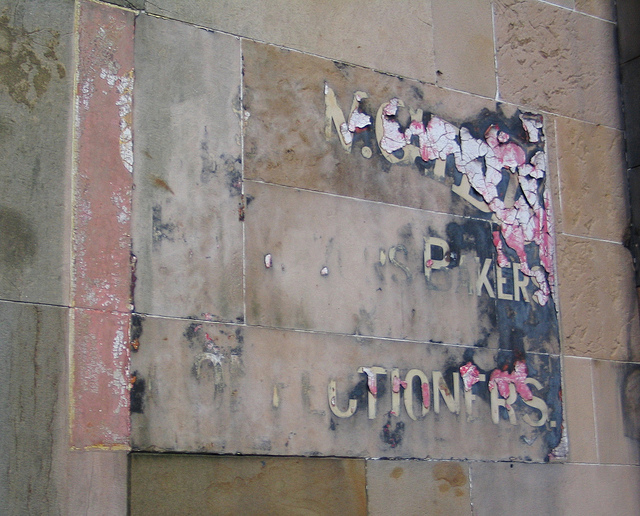
2014 will be my tenth year in Edinburgh. It’s not a big city — you can walk around most of it in a day. So every so often I convince myself that I know it inside out now, that I’ve seen everything. Not so! There are always little details to spot, which is one of the things I love about it.

1384564

1384563

1384559

1384557

1384556

1384554

1384553

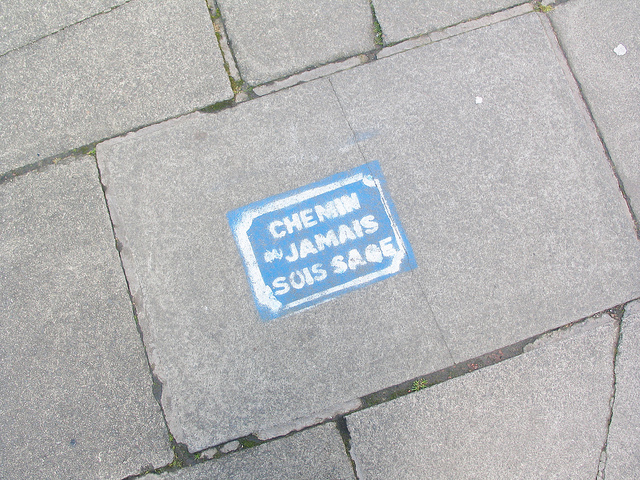
<3 Edinburgh

<3 Edinburgh

<3 Edinburgh

<3 Edinburgh

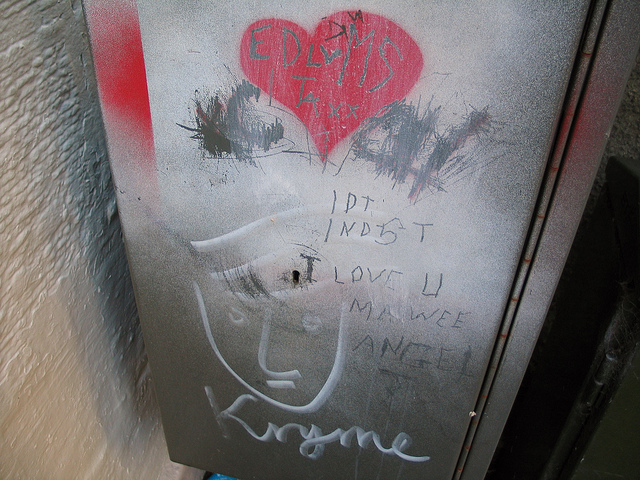
If destroyed, true.  If not destroyed, still true.

<3 Edinburgh

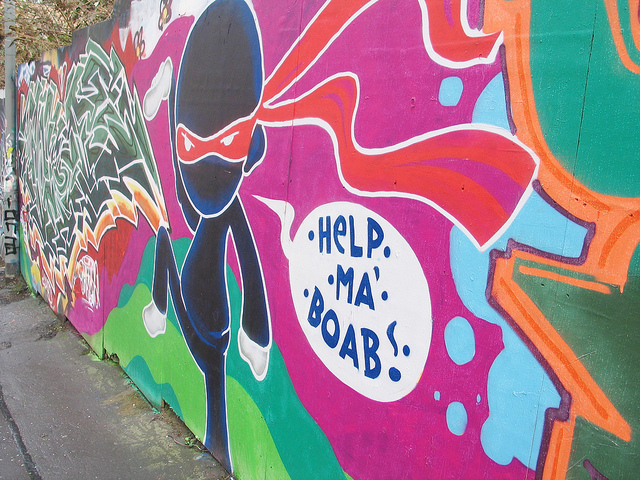
Help ma boab!  (Edinburgh)

Bunny, Edinburgh

Pasty ghost, Edinburgh

What are YOU loving this week?

*

Like shiny things? Check out Edinburgh Vintage, a totally unrelated ’sister site’ full of jewels, treasures and trinkets. If you want to get in touch you can follow OneNightStanzas on Twitter, or email claire[at]onenightstanzas.com. I reply as swiftly as I can!
You don’t choose your literary heroes: they choose you.

Monday, January 13th, 2014

A version of this post first appeared at One Night Stanzas in November 2008.

I’ve just revisited this article on the Guardian Books Blog, in which Stuart Evers talks about his seemingly rather misguided admiration for the protagonist of George Orwell’s Keep The Aspidistra Flying, Gordon Comstock. He notes that Comstock is really not a nice guy… and the fact that he truly admired this man when he first read the novel makes him feel rather uneasy. Evers admits that upon finishing the novel for the first time, he actually started to emulate Comstock - he started smoking the same cigarettes, spending his money on the same things, and getting interested in the same politics. He ends bitterly, sending out a “thank you so bloody much” to Orwell and Comstock, as though realising with hindsight that, by getting so “involved” with this not-actually-real person, he has somehow done something wrong.

Has he done something wrong? Are we only supposed to like, admire and emulate the “good guys” in literature? Sure, there are a lot of admirable goodies out there - I’d be the first to stand up and say that I truly love and admire Atticus Finch, for example. But surely, as normal human beings, it’s OK for us to be drawn to the “bad guys” - the flawed characters, the dishonest characters, the downright nasty characters… right? Hamlet, for example - arrogant, selfish, murderous and slightly insane, and yet he’s a big favourite. I personally rather like Milton’s Satan, and perhaps even worse, Alex DeLarge. I know for a fact that the normally sugary-sweet Gala Darling has a dark side - she’s forever in love with Patrick Bateman. It’s not necessarily logical - you don’t choose your literary heroes: they choose you. They reach out to something within your personal being and speak to you. Just because they happen to be a “baddie,” that doesn’t necessarily make you one too!

At the end of Evers’ article, I felt like standing up and cheering, because the other day I experienced exactly the same discomfort that Evers feels, talking with some friends about Beat-Generation-era literature.
As many of you will know, I am a huge Allen Ginsberg fan. I first encountered Ginsberg about halfway through my four-year Masters degree, when I had to read “Howl” for class. My first reaction was “what is this absolute rubbish?”, and when I read some background information about Ginsberg, I was even less impressed. Loud, arrogant, misogynistic… he did not seem like a nice guy at all. Who does he think he is, I thought, this man who wrote this epic, spiralling, meaningless poem that everyone seems to love? It’s garbage!
But then I had an epiphany - I heard a recording of dear old Allen reading “America.” I loved the poem, and his reading - with all its humour and seriousness and liveliness and weariness all at once - and decided to give him another chance. I read about Ginsberg’s life, I read his annotations on “Howl” and discovered what every cryptic line really meant (and every line really does have some correlation to his life, things he experienced, or things that were going on at the time), and probably most importantly, I read “Kaddish.” I bought an album of readings which included all these poems, and more, and listened to it from beginning to end, which exhausted but thrilled me. By now, the poems had turned on me, and they’d convinced me that this man - who I’ll freely admit was still loud, arrogant and misogynistic - was one of the greatest American writers of all time. He was not always nice, he was not always fair, and he wasn’t even always all that good. But he was brilliant, and in spite of myself, I will love him forever and ever.

So imagine my horror when, at a party a few years ago, a friend of mine came out with this:
“I don’t get it with Ginsberg. I’ve read ‘Howl,’ which was… ridiculous, and then everything else just looks like a poor imitation of ‘Howl.’”
I won’t lie to you - I felt like I’d been slapped. I couldn’t believe the enormous feeling that welled up in me. This was my friend, and I found myself wanting to grab him and shake him and scream, “why don’t you read ‘Howl’ properly and then you’ll see it’s not ridiculous, like I did?! How can you say everything else is a poor imitation of ‘Howl’?! Have you even read anything else?! Have you read ‘Kaddish’?! And how can you say that anyway?! The man wrote for 50+ years in a million different style on a million different subjects! Saying you don’t like Ginsberg because of ‘Howl’ is like saying you don’t like the Beatles because of ‘Hey Jude.’ Aaaargh!”
Obviously, I did not do this. I tried to express myself in a quieter way, and just said that actually, Ginsberg was my all-time favourite writer and I loved him very much. All I got was (quote), “well, good for you,” which didn’t make me feel much better.

My desire to shake my friend and scream in his face rather troubled me. After all, I knew all this stuff, and I’d thought it and said it myself once upon a time. But it also brought home to me the fact that you really can’t choose your idols - and when they choose you, they can really cling on, dig in. I’m sure the friend in question has literary heroes he’d gladly defend by shaking and screaming at me, if I were to criticise them. I know one guy who deeply loves Iago, and gets the same strange rage when people try to tell him “but Iago’s a really bad guy.” I know someone else who is a big fan of William Carlos Williams, and nearly had to walk out of a seminar recently when one woman in the group said “but it’s all just rubbish really, isn’t it? The Red Wheelbarrow - my children could write poetry like that!”
The fact is, Stuart Evers seems to be worried about admiring Gordon Comstock. Why? Because he’s worried that he’s going to be judged, probably. But I’d be interested to know what his reaction would be if anyone were to actually turn around and say “Comstock’s the worst character I ever came across,” or “that book’s crap, Orwell couldn’t write to save his life”. Personally, I am not worried about admiring Ginsberg for fear of judgement. It’s the defensive rage that’s the truly worrying thing…

*

Like shiny things? Check out Edinburgh Vintage, a totally unrelated ’sister site’ full of jewels, treasures and trinkets. If you want to get in touch you can follow OneNightStanzas on Twitter, or email claire[at]onenightstanzas.com. I reply as swiftly as I can!
(Photo credit)

Things I Love Thursday #87: what I did on my holidays.

Thursday, January 9th, 2014

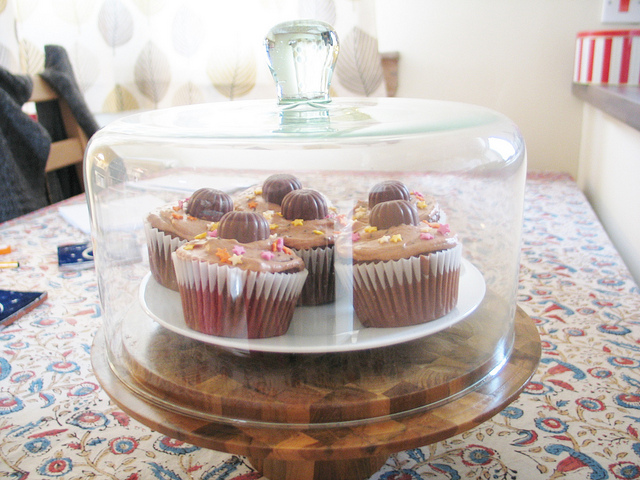
Cake dome + triple chocolate ganache truffle cupcakes (#whatveganseat)

1. Baked some tasty vegan treats.
The above cupcakes are triple chocolate ganache truffle cupcakes and yep, they’re totally vegan. Dark chocolate sponge with chocolate ganache in the middle, chocolate not-butter-not-cream frosting, and a Moo Free truffle added to the top for good measure! The rather beautiful cake dome was a Christmas present from the loveliest Lovely Boyfriend. Though it looks like a vintage one, it’s new, but it is made out of 100% recycled materials! Amazing gifting, methinks.

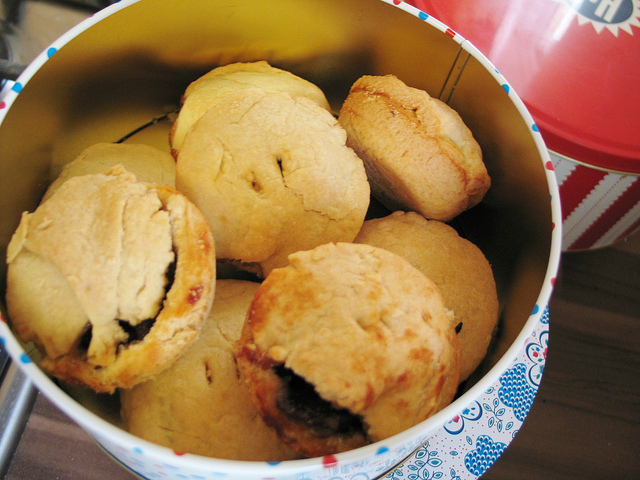
The aforementioned LB requested “a gigantic mince pie” for Christmas dinner dessert, so I duly made a full-size 9-inch diameter mince pie with rather delicious boozy mincemeat. I had some scrappy little bits of rolled shortcrust pastry left over, so I used them to make these: the world’s ugliest mince pies. They obviously still tasted great, though!

Ugly mince-pies I made from scraps of leftover pie crust.

2. Had some even tastier vegan treats made for me.

I think I may have already mentioned here that Lovely Boyfriend is the best vegan cook since Isa Chandra Moskowitz, yes? Well, over our winter holiday he’s had even more time than usual to cook up a storm, so my belly has been extremely happy. Lots of people have been curious about how the heck you even do Christmas as a vegan — the answer is, the same as everyone else. You eat lots and lots of extremely tasty stuff! This was our Christmas morning breakfast:

Christmas morning breakfast: scrambled mushroom tofu on a sesame bagel, and champagne :)

That’s Isa’s own tofu scramble with a Lovely Boyfriend twist: a Christmassy spice mix featuring lots of rosemary, and extra mushrooms. All on a sesame bagel and served with champagne, because Christmas.

I didn’t get a pic of our Christmas dinner because it seemed rude to be a food-snapping hipster blogger in front of our guests (also I was too keen to just SCOFF IT), but again we are indebted to The Great Isa. We had a version of this stuffed seitan roast, with a more traditional sage-and-onion type stuffing to make it more Christmassy. Plus all the usual roast potatoes and veg type stuff, and then my uber-mince-pie with vegan ice cream and these to finish. Delish!

3. Received many amazing gifts.

I couldn’t really do a gratitude post at this time of year without thanking everyone who bought me gifts over the festive period. Thank you, amazing people of my acquaintance, for giving me so many thoughtful, useful and beautiful things. I especially want to thank the folk (a lot of you this year!) who shopped local, supported small businesses like mine, bought secondhand, and/or made charitable donations in lieu of presents. You rock.

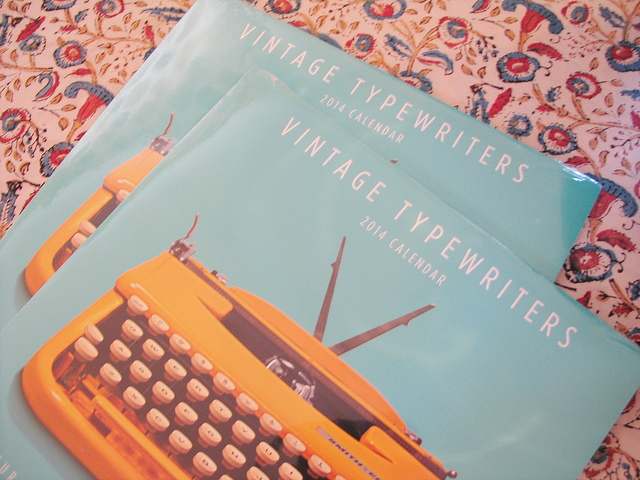
Everyone thought this would be a good gift for me!

I also love that so many people got me gifts that are so ‘me’. (This seems to happen a lot, so I hope that means I’m easy to buy for. Or perhaps I am just easily pleased!) This vintage typewriter calendar was clearly an obvious choice… and now I have one for home and one for work! Perfect!

4. Met the newest member of the family.

My parents have always been cat people. Seriously: their house is full of cat-related stuff. Cat mugs, cat ornaments, cat coasters, cat Christmas tree decorations… they really like cats. So they were devastated when their faithful furry friend Beatrice went to the great cattery in the sky back in 2012.

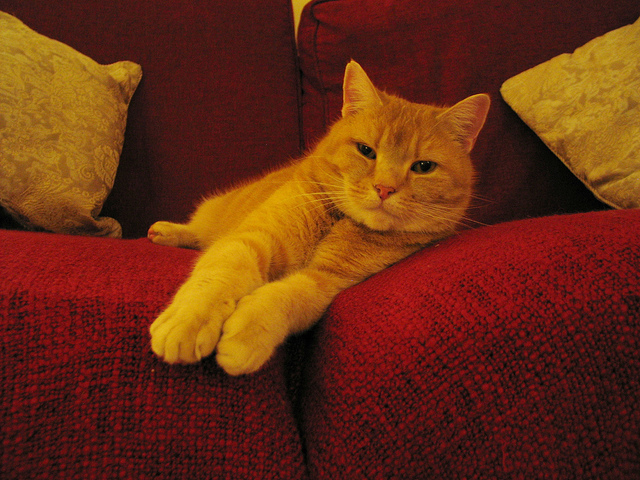
BENNEH.

After a period of mourning for “Little Bertie,” as she was affectionately known, I was extremely excited to hear that they’d decided to rescue a new fur-baby. World, meet Benny! He’s been part of the family for nearly three weeks now, and he’s a super cute, slightly eccentric TOTAL BABE. As you can see, he knows exactly how beautiful he is and loves having his photo taken.

My parents' new kitty, Benny!

Like me, he’s also a stove-worshipper. Smart kitty.

5. Bought a lot of books.

I know, I know, so what’s new? In short, I made the mistake of going to Bookcase Books in Carlisle while on my New Year travels.

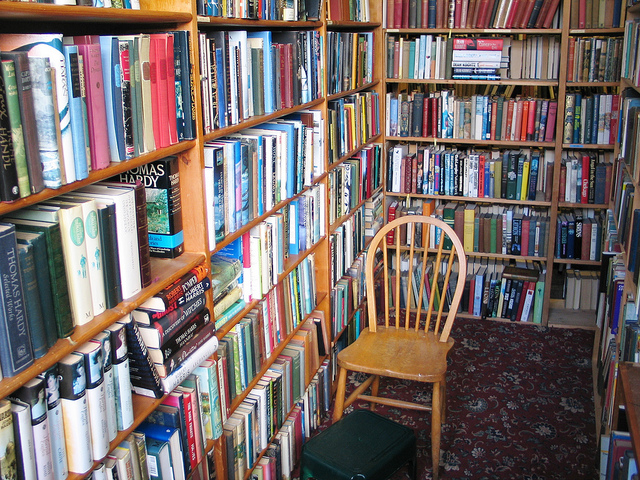
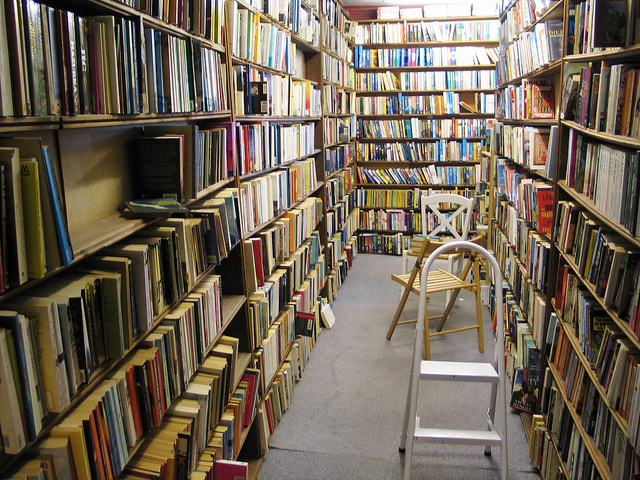
Bookcase Books in Carlisle.  Place of dreams.

I’ve blogged about this place before. The bookshop occupies two big townhouses that have been knocked together, and there are books in every room, including the two basements and the huge attic. You can also buy the artwork, paintings and oddities (I found an antique book-press I so wanted) which are displayed in the various corridors and staircases. There are over thirty rooms full of books here. It’s AMAZING.

Bookcase Books in Carlisle.  Place of dreams.

Hours of book-browsing fun, and only an hour on the train from Edinburgh. Just sayin’!

6. Did a lot of plotting.

I love New Year, perhaps even more than I love Christmas (and I really love Christmas). I’m very good at saying “yes” to things and ending up super busy all the time, and very bad at pausing to take stock. So during that between-Christmas-and-going-back-to-work lull, I try to do as much mental stock-taking as I can.

Happy 2014!

There’s always a lot of journalling. This year, I’ve been reading posts like this and thinking about ways to make new year’s goals and resolutions (which I always make, regardless of how uncool everyone says it is) that are meaningful and will last. I prefer to set new year goals — a list of things to achieve — rather than make resolutions, because goal-setting feels way more positive than ’stop doing this thing you do because you like it,’ and ‘do more of this thing you don’t do because you hate it,’ etc. (For example, this year I’ve got ‘find a yoga class I like,’ rather than ‘do more yoga.’) But I have also committed to a couple of “higher resolutions” (the big stuff), which I hope to work on all year.

[One of them is: get better at being sociable. I am generally bad at making new friends, especially with women (this article, the part about rejection, rang so true with me). I have this assumption that most of the people who hang out with me only do it out of some masochistic form of politeness. I'm sure you'll all agree that that mindset is pretty toxic and needs to go. It's been with me a long time, but this is the year I intend to at least begin to cut that shit out. And the other big resolution is a secret for now, because I don't want to jinx it. If I manage to keep it, then all should be revealed in due course.]

Finally, I also use New Year as a time to think about the past year, and what I achieved. Every life coach/internet guru/mindfulness blogger and their dog is keen to point out that saying thank you for the good stuff in your life makes more good stuff happen. So that’s why I write Things I Love Thursday posts (still), and it’s also why every year I write a ‘in [year], I…’ post. Usually I have to go through my old diaries, Facebook updates, and blogposts to recall what I did. So much good stuff gets instantly forgotten and I’m always gobsmacked to revisit it… which is another reason why this process is useful.

If you haven’t done any 2014 plotting or 2013 revisiting yet, try it! The year is young! I highly recommend it.

What are YOU loving this week?

*

Like shiny things? Check out Edinburgh Vintage, a totally unrelated ’sister site’ full of jewels, treasures and trinkets. If you want to get in touch you can follow OneNightStanzas on Twitter, or email claire[at]onenightstanzas.com. I reply as swiftly as I can!

Dear poetry newbies: are you ready to workshop?

Monday, January 6th, 2014

A version of this post first appeared at One Night Stanzas in October 2008.

What does workshopping involve?
Basically, workshopping is about testing your work out on other writers to see how successful it is, and getting an idea of how your audience will approach it. It’s a tool used by writers of all kinds - from people who pen corporate business documents to playwrights and even musicians. Usually, you get together with a bunch of other poets, and you each read a sample of your work to each other (often, the rest of the group will already have read and thought about your chosen pieces - most workshops I’ve been in have circulated a ‘reading list’ by email a few days before the workshop itself). Each member of the group then offers feedback and constructive criticism on your work, and in turn, you give your thoughts on their work. It may sound a bit scary, but workshops are generally small, relaxed groups were just about anything goes, and they create a safe environment where you can test out poems you’re not too sure about before you unleash them onto the general public!

How does workshopping benefit my poetry?
Sometimes it’s hard to know what to do about your poems once you’ve finished them. Editing is a tricky business - the more you look at a poem, the less you can see how to change it (you know how you never notice your own typos? It’s a bit like that). You become so familiar with your work that the only thing you can really do is squirrel it away for a couple of months in an attempt to then come back to it with fresh eyes, but this is tricky and takes a long time. The other people in your workshop can provide those fresh eyes for you.
Your workshop group can tell you exactly what about your poem “needs work” when you can’t see it yourself. It might be your handling of punctuation, a dodgy rhyme scheme… whatever. Your group can offer in-depth criticism, right down to the smallest comma. Workshop groups are also useful when it comes to keeping your poems clear. It’s easy to get caught up in your own head, where every image in every poem makes perfect sense to you. However, workshopping provides a handy reality check - your group may well turn around and say “I didn’t understand what was going on in this poem.” That may sound like a harsh comment, but it’s important that your readers feel able to get involved with and relate to your poems. Your workshopping group is your barometer when it comes to things like this - they’re like a small panel of poetry readers, only better. They write too, they suffer from typos and mess-ups and rejections too, and they want to help you… for free!

How do I know if I’m ready to workshop?
This is a tricky one. If you’ve never workshopped before, your first time can be rather weird, intimidating and even a bit disheartening. You have to bear in mind that you’re putting your work into the hands of other people and essentially saying, “here’s my poem - do your worst.” You’re laying yourself open to criticism, and whilst it should all be constructive, when several different voices are all pointing out issues in your work, you can end up feeling a bit like you’re under attack.
Many young, inexperienced poets are very bad at taking criticism, simply because they don’t get very much of it and when they do, it comes as a bit of shock. I used to be dreadful - hearing someone criticise my poem, I’d just think “what do you know? I like it how it is so get lost!”, regardless of how constructive or useful the criticism was. If you have a similar attitude, you need to work through it. Constructive feedback is your friend, and workshopping will never be helpful to you until you learn to take it on board.
The best thing to do is just get in there and try it. Try to join a relatively new group if you can, or wait until they re-group after a break, say after the Christmas holidays, for example. Joining a really established group who are already very used to each other’s styles and voices can leave you feeling a bit left out. If you can’t avoid joining an established group, at least try not to be the only newb. Take along a friend or two so you’re not the only one who feels out of the loop!
Just go along for one workshop and see how it goes, see how you feel about the treatment your poems get. Bear in mind that each of your fellow workshoppers is just a reader like any other, regardless of age or experience - they’re just like you, and the points they make will often be based on nothing other than personal opinion. Some people will like your work and others won’t, and all the advice you get is just that - advice. You can take it or leave it… just make sure you give all of it fair consideration!
If, at the end of your session you think you’ve picked up some useful tips, you’re ready to get stuck into workshopping - so sign up! If you come out feeling angry, upset or disheartened, however, you may need to a) try a different workshop (some take a lighter approach than others) or b) wait a while before you commit to workshopping. Try getting one-to-one feedback from friends or family first, as practice. Think carefully about how you react to criticism, and try to move away from the fact that your poems are your babies and you need to protect them, and more towards the idea that your poems are babies that need to be nurtured - and sometimes disciplined! - in order to grow. Once you’re able to see criticism as a positive thing, then you’re ready to workshop.

How do I start workshopping?
Finding a workshop can be tricky, and will depend on where you live, who you know and how literary your local community is! However, you’d be surprised - even in the most unlikely places, workshops exist. Do some research online, or ask local literary organisations or establishments if they know of the existence of a creative writing workshop in your area. The local library, bookstores, the University or college closest to you - these are all good places to go to ask for information. If all else fails, get yourself over to Gumtree or Craigslist and place an ad. Be sure to check out the existing ads too - someone else might be doing the very same thing!
Once you’ve found a workshop, make contact - don’t just turn up at a meeting. Find out who runs the show and drop them a line; let them know a little bit about yourself and get as much info as you can about the workshop. Make sure they’re cool with poets, they’re OK to take on beginners and you don’t have to pay too much (workshops sometimes as for a small weekly/monthly fee for buying tea/coffee, renting the room they use or whatever. If for any reason the fee seems unreasonable, look elsewhere.). Ask them what you’d be required to do, and if you’re feeling super-nervous, ask if you could come to your first workshop without contributing - just to sit in and see what it’s like. Most groups should be cool with this… and as I say, if you’re the only newb or you just need some moral support, ask if you can take a friend!

*

Like shiny things? Check out Edinburgh Vintage, a totally unrelated ’sister site’ full of jewels, treasures and trinkets. If you want to get in touch you can follow OneNightStanzas on Twitter, or email claire[at]onenightstanzas.com. I reply as swiftly as I can!

(Photo by NuageDeNuit)