Dear poetry newbies: writing in the face of adversity.
Monday, September 30th, 2013
A previous version of this post first appeared at One Night Stanzas in September 2008.
Here are a few phrases you’ll probably encounter a lot if you decide to tell people that you want to be / are a writer. Perhaps you’ve already heard some of them…
“Don’t be ridiculous. How are you going to support yourself?!”
“I used to say that when I was your age… you’ll see.”
“But writing’s just a hobby, isn’t it? ”
“Great. But what’s your real job?”
Sound familiar? I’ve had responses like these countless times from people who genuinely can’t understand why anyone would want to even try to make their living from writing. I think you can apply them to just about any other creative endeavour, too — try telling people you want to be a painter, fashion designer, musician, sculptor or actor, and you’ll probably hear similar things. This kind of response can be incredibly demoralising, particularly if it comes from a trusted friend, family member or personal hero. Often you’ll hear things like this from people who are older and supposedly wiser than you, which can also leave you questioning yourself. But no matter how often you hear these phrases, please, please don’t allow yourself to be disheartened by them. Many people can’t understand the possibility of an equation like writing + hard work = paying the bills. But that doesn’t make it a scientific impossibility!
Great. But what’s your real job?
OK, so the person who asks this question is probably assuming that your writing doesn’t make you much money, and as a result, you probably have another job which helps keep a roof over your head. This is a reasonable assumption to make - many writers do have a second source of income, either out of financial necessity or because it directly facilitates their writing. This is particularly true of poetry, I’m afraid. Poetry is an integral part of our everyday lives - it’s in the nursery rhymes we sing to our kids, it’s in greetings cards, advertising, and jingles on the radio. But despite this, not many people actually make the conscious effort to read poetry - to buy poetry collections, attend poetry readings or seek out new and exciting poets locally or online. Poetry just doesn’t sell well, which means that it does not generate too much income - and as a result, most poets do “real” jobs throughout their lives. William Carlos Williams worked as a doctor his whole life (he wrote short bursts of poetry in the few spare minutes between appointments), and Philip Larkin kept up his career in librarianship in spite of his rise to poetic fame. Most of the poets I know work in literature-related environments - some are English teachers, some University tutors, some work in bookstores or write copy for medical journals. Lots of poets support themselves by setting up or working for small publishing firms, which not only helps them survive - it helps poetry survive, too. But yes, I’m afraid it’s true - 99% of poets have to work at something other than their writing, which means you will probably have to, too - at least for a while.
Don’t be ridiculous. How are you going to support yourself?!
So you probably are going to have to get a “real” job, and therefore - although this isn’t very nicely worded - it is a fair question. When you’re not frantically scribbling, what are you going to do?
Well, you’re a creative person, and so I’m guessing that the thought of a 9-5 office post or a low-paid table-waiting job probably makes you want to scream. But you can relax, because you do not need to do those jobs! Teaching is a popular one. You don’t necessarily have to do a teaching degree and end up in charge of a class of thirty kids - just think about what you’re good at; what skills do you have that other people might want to learn? You write, so I’m guessing your language skills are pretty good; or perhaps you play flute, or whizz through long division? Pick a skill, work out a step-by-step teaching strategy, and then make bright, bold posters and advertise yourself (“Want to learn French? Get lessons from a native speaker!”). Alternatively, you could look around for private tutoring agencies and firms in your area, and see if they could take you on. That’s how I ended up working as an English tutor and lecturer; that’s how I paid my bills and supported my writing for over five years.
There are other ways, of course, if teaching doesn’t float your boat. Working in a bookstore may just sound like another dull retail job, but give it a try. Chances are, the people who work there are into words in the same way you are - particularly if the store is an independent one. A good poet friend of mine worked for the huge chain bookstore Waterstones, and surprisingly, loved every second. He got to work in the poetry department, and he went through there like a dose of salts, insisting that they order in more books by Charles Bukowski and other hip writers, writing enthusiastic reviews for poetry books to make people buy them, and making suggestions for cool literary events for the store. He also took the time to chat with the customers about the books they were buying, and had a great time meeting loads of like-minded people!
Basically, your “real” job should always be something you don’t totally hate. Creative people can wither in soul-crushing corporate workplaces, so make sure your day-job isn’t affecting your writing in a negative way. If it is: quit. Go work in a cool café, deliver leaflets or posters, become a carer for the elderly (old people are amazing, and good, caring people are always needed), walk your neighbours’ dogs, drive a pizza van. Do something you like, and when you’re not doing it, write. Don’t let anyone else tell you how you should support yourself.
But writing’s just a hobby, isn’t it?
So, you mainly need the “real” job because writing does not tend to generate a regular income - if you go through a bad patch with your writing and have no financial back-up, you could end up with no rent-money at the end of the month. However, writing is not just a hobby - it can make you money, if you know how to work it!
Poetry’s tricky to sell, as we’ve already discovered. However, some magazines do pay for poems. It’s not generally a lot, but it’s something - and the day of your first paid magazine gig is a momentous occasion! You can also get paid for reading your poetry to an audience, so try and get yourself on the bill of a local poetry reading. Many of these events charge a small entry fee, and more often than not, that goes to the poets. If your scruples allow, you can also try touting your poetic wares to greetings card companies or other product manufacturers… obviously you won’t be writing your best or most complex work, but you’ll be writing and making some cash!
Other forms of writing are more lucrative than poetry, thank goodness! You can make cash-per-word writing freelance magazine articles, reviews etc, and there are heaps of websites out there with advice on this kind of thing - just type “freelancing for beginners” into Google (but watch out for scams… don’t part with any cash for online writing courses or the like - you should be able to get all the info you need for free). You can also write for a specific market - as I said earlier, medical writing can generate income, as can travel writing and writing for other specialist areas.
If you’re feeling courageous, you can also send your work off to poetry contests with cash prizes (though with most of these you have to pay an entry fee… make sure it’s worth paying to enter!) or read up on grants and other funding for writers.
I used to say that when I was your age… you’ll see.
Whatever you do, do NOT be discouraged by negative responses from other people! This “you’ll see” response is particularly nasty, because it implies that you’ll fail, or that you’ll regret pursuing your writing at a later stage of your life. Yes, you should be sure that writing is really what you want to do, but chances are if you do decide to follow that path, and if you stay smart and true to yourself, you’ll have no regrets whatsoever. As for the “don’t be ridiculous” comment - writing and creating are not ridiculous exercises. If you ask me, slaving away at a PC or photocopier for eight full hours of your waking day is much more ridiculous than creating something really cool and unique and sending it out into the world for people to enjoy. And if someone asks you what your “real” job is, tell them it’s writing - you just happen to have another job on the side.
*
Budding writer? Creative person in need of a fun job? Check out the various resources and services at Bookworm Tutors. Alternatively, check out Edinburgh Vintage, our sister site. If you want to get in touch you can follow OneNightStanzas on Twitter, or email claire[at]onenightstanzas.com. I reply as swiftly as I can!
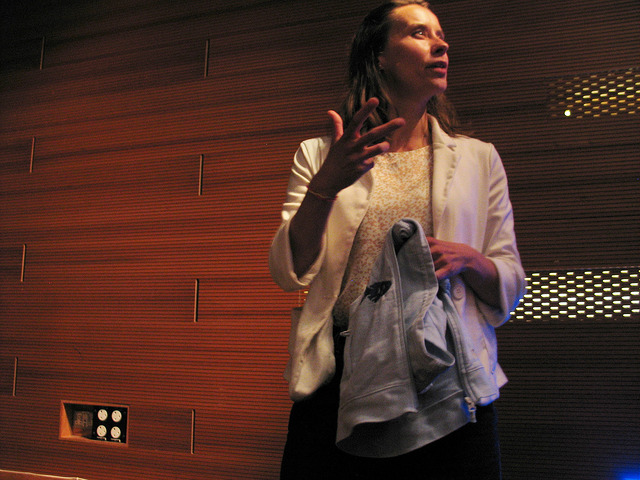
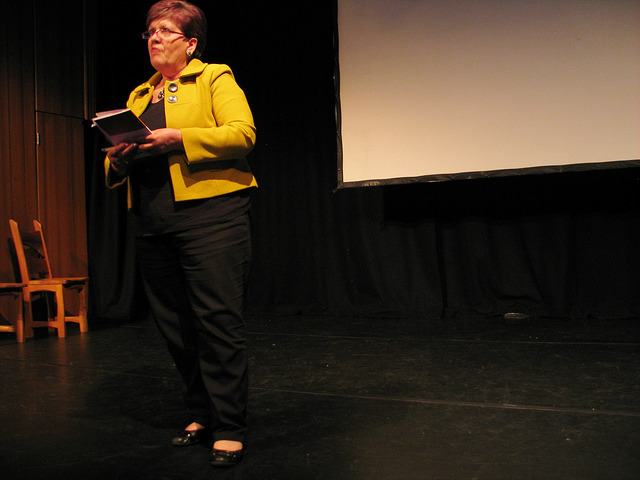



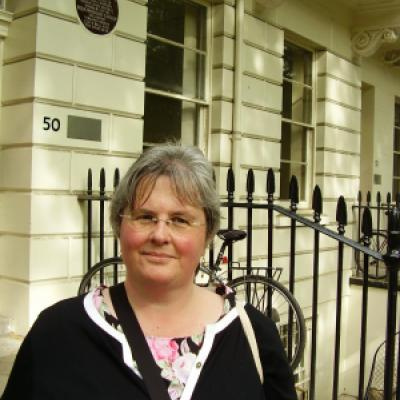 September’s Shore Poet is Angela McSeveney. Angela’s first collection of poems, Coming Out With It, was published in 1992, after she received advice and encouragement from fellow writers Liz Lochhead and Ron Butlin. She has since published several other books of poetry, the most recent of which, Slaughtering Beetroot, was produced by Mariscat Press in 2008.