Posts Tagged ‘reading’

Where is Claire?: talks, readings, happenings for Spring 2014

Saturday, February 1st, 2014

Happy Birthday, Allen Ginsberg!

OK, it’s not quite Spring yet, but I am trying to be optimistic.
I’m doing some events, and I would like you to come to them, because it seems no matter how many readings etc I undertake, I still get deathly afraid at every single one. So please come to some of these Things and make me feel better.

*

Greenlight presents New Scotland: New Culture?
Friday 7th February at Summerhall, 7pm. £5 and ticketed

“What is the role of culture in Scotland, now and in the future?
What can politicians and the state do to support culture and the arts while guaranteeing creative freedom?
As Scotland’s democracy evolves, should we seek to redefine what culture means in a national and international context?”
So, those are some big and scary questions, and I have been given a 15 minute TED-talk-style slot in which to try and answer them. Except erm, instead I am going to go slightly off-piste and talk about my personal favourite cultural issue: diversity and inclusion. I might also read a poem or two.
There will also be a bunch of other excellent speakers, who I imagine will stick to the brief a little better than me (sorry, everyone). There’ll also be music. And there’ll be Summerhall, which is always good. Please come along to this one, folks — my terror levels are significantly more elevated than usual for this event!

*

Rally & Broad: And The Beat Goes On
Friday 21st February at The Counting House, 7.30pm. £5.

I’m pretty sure you already all know what the literary juggernaut that is Rally and Broad is all about. If you don’t, I’d like to know exactly where you’ve been hiding. Basically, it’s a massive monthly night of literary and musical delights; a cabaret-style set up showcasing some of the best creative talent from across Scotland and beyond. And if you only know one thing about it, you’ll know it’s hosted by Jenny Linsday and Rachel McCrum. From what I’ve seen on Flickr, they each wear a different fabulous frock every month and always look rather nifty.

I’m chuffed to have been asked to read at the February R&B, and I am already eyeing my wardrobe nervously, because what shall I wear?! More importantly, what shall I read, in order that I am not eclipsed by the very impressive humans appearing above me in the line-up?! Seriously, look at this — and then tell me you don’t want to be there. I’m pretty sure that’s the most EXCITING STUFF you can get for a fiver anywhere.

*

Shore Poets: February
Sunday 23rd February at Henderson’s at St John’s, 7.15pm doors. £5 / £3 concessions.

OK, I am not performing at this one, but I will be floating around behind the scenes, supposedly helping out, but probably just being awkward and starstruck around the brilliant performers. This month, Shore Poets brings you the one-and-only William Letford, of whose work I am a major, major fangirl. Look him up on Youtube and see what I mean! And Mr Letford is only the start of it… we have not one but two headline poets this month, honorary Shore Poet Diana Hendry, and honorary Shore Poets president Stewart Conn. Both have brand spanking new books either just out, or coming very soon, so come along to hear (I assume) some exciting new work! On top of all this, we’ll be presenting the annual Mark Ogle Memorial Award, which this year went to the excellent Meg Bateman. AND there’ll be live music from The Whole Shebang, as well as our infamous lemon cake raffle. YOU can also read at this event, by bringing a poem, putting your name in the hat at the door, and then, if your lucky, getting picked for one of our two wildcard slots. Yep, you. Come along already!

*

TenRed: April
Wednesday 2nd April at The Persevere Bar & Function Room, Leith, 7.30pm. £3.

Alright, I know this is still a little way away, but I am so excited that TenRed is back among us, and I’ve been asked to perform at it for the third time! April has a great line-up, which excitingly, includes Lovely Boyfriend (billed here as Stephen Welsh)! Never mind me, come and hear him. He barely ever performs anywhere, so take the opportunity to get a rare sighting! Look, there’s even a trailer:

*

Photo by Chris Scott.

Like shiny things? Check out Edinburgh Vintage, a totally unrelated ’sister site’ full of jewels, treasures and trinkets. If you want to get in touch you can follow OneNightStanzas on Twitter, or email claire[at]onenightstanzas.com. I reply as swiftly as I can!

Shore Poets September: you should all come to this.

Monday, September 16th, 2013

I’m really excited to be announcing — on the Shore Poets blog, on Twitter, on Facebook, and to anyone who stands still for long enough — that the new Shore Poets season is about to commence.
Why am I so excited? Well, I’ve been a Shore Poet for nearly a year… but this is the first season where I’ve actually helped to choose the programme. I’m part of the New Poets sub-committee (oh yes, it’s complex stuff. No, really), which means that all the New Poets hosted by Shore Poets between now and June 2014 have my official seal of approval.

I feel very humbled indeed to be given such responsibility, and greatly appreciate my fellow Shores for taking my thoughts and ideas on board. At our programme-creating meetings, I tried as much as possible to consider the issues I raised in my last post, as well as thinking about the various poets out there whose work I really, really like. Over the course of the new SP season, we’ll be hosting in the New Poet slot people like the excellent Tracey S Rosenberg, and the lovely and talented Theresa Munoz. There’ll also be some really exciting names headlining our events and providing the essential live music… as well as, of course, a great set from one of the Shore Poets to round off each month. (Date for your diary: I’m up on 27th October.)

That’s all to come, but in the meantime, here are the details for the first event of our new season, this very month! It’s going to be all-round brilliant, but I am especially excited to be welcoming Roddy Shippin as the New Poet. I’ve published him here at ONS before, and am always keen to go and hear him read, because he’s great. Just one of many reasons to come along on 29th September… read on to find out the others!

SHORE POETS: September
Henderson’s at St John’s, Lothian Road, Edinburgh
7.45 pm to 10.00 pm
Sunday 29th September 2013

Bar from 7.15pm
Admission £5 / Concessions £3

chrys
Our headline poet this month is Chrys Salt. Chrys is an incredibly prolific writer, with drama and nonfiction titles to her name as well as several poetry collections, including Grass (Indigo Dreams, 2012) and Home Front/Front Line (Roncadora, 2013). She is also an important figure in Scotland’s literary arts scene, working as Artistic Director of arts venue The Bakehouse, and Literature Convener for The Dumfries and Galloway Festival. You can find out more about Chrys, and read some of her poems, by visiting her website, chryssalt.com

angelamc September’s Shore Poet is Angela McSeveney. Angela’s first collection of poems, Coming Out With It, was published in 1992, after she received advice and encouragement from fellow writers Liz Lochhead and Ron Butlin. She has since published several other books of poetry, the most recent of which, Slaughtering Beetroot, was produced by Mariscat Press in 2008.

roddysh
Our new poet this month is Roddy Shippin. Roddy is an exciting new voice in Scottish poetry: his work has been published by Poetry Scotland, Ink Sweat & Tears, a handful of stones and One Night Stanzas, among others, and he is one half of the creative team behind the popular monthly spoken word night Blind Poetics. You can read one of Roddy’s poems, Casebook, here.

Our live music for the evening will be provided by Colin Donati and his band, Various Moons.

We’ll also be playing host to our now-regular SP Wildcard Poet… that could be YOU! If you fancy entertaining us with a poem, just put your name in the hat when you pay at the door. One name will be drawn, and that person will get to open proceedings with a poem. Be sure to bring your best work with you!

And of course, a Shore Poets event wouldn’t be complete without our infamous lemon cake raffle.

We hope you’ll come and help us kick off our new season with a bang! Let us know you’re coming — and invite your friends — using our Facebook event!

7.45 pm to 10.00 pm
Sunday 30th June 2013

Bar from 7.15pm
Arrive early to nab a good seat!
Admission £5 / Concessions £3

If you would like to receive regular news about Shore Poets — including being notified of our events — send an e-mail to: newsletter (at) shorepoets.org.uk. You can also contact SP by emailing publicity (at) shorepoets.org.uk

*

Budding writer? Creative person in need of a fun job? Check out the various resources and services at Bookworm Tutors. Alternatively, check out Edinburgh Vintage, our sister site. If you want to get in touch you can follow OneNightStanzas on Twitter, or email claire[at]onenightstanzas.com. I reply as swiftly as I can!

Things I Love Thursday #78

Thursday, May 2nd, 2013

It’s been a busy week… so busy that last night I finally ran out of spoons and nearly burst into tears in a carpark, just because I was so, so tired. (Fortunately, Lovely Boyfriend was on hand to give me hugs, ply me with chips and pay for a taxi home.) However, it’s also been a totally amazing week. Here are just a few of the things I’ve been loving…

252825

252821
Spring finally arriving (properly) in Edinburgh
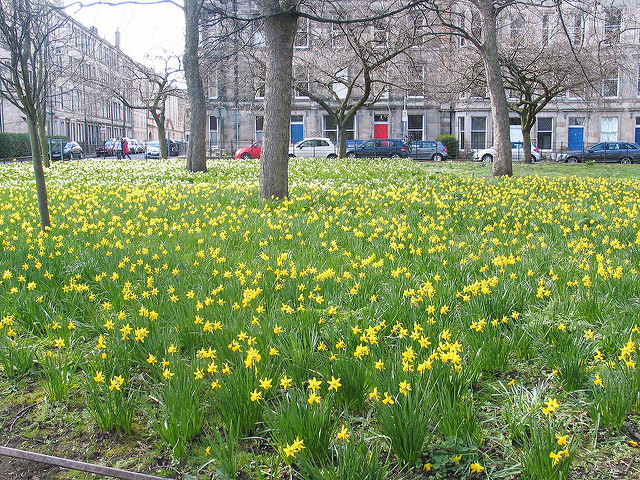
I love Tollcross in the Spring… loads of daffodils everywhere, the Meadows two minutes away (so as soon as it feels even vaguely warm I can sprint outside to lounge), the Pine Tree Bakery smelling delicious… wonderful.

252826

252829

252931
Baking, of course
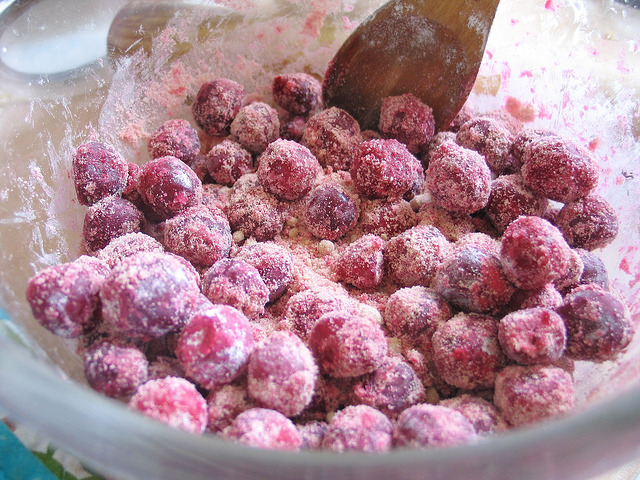
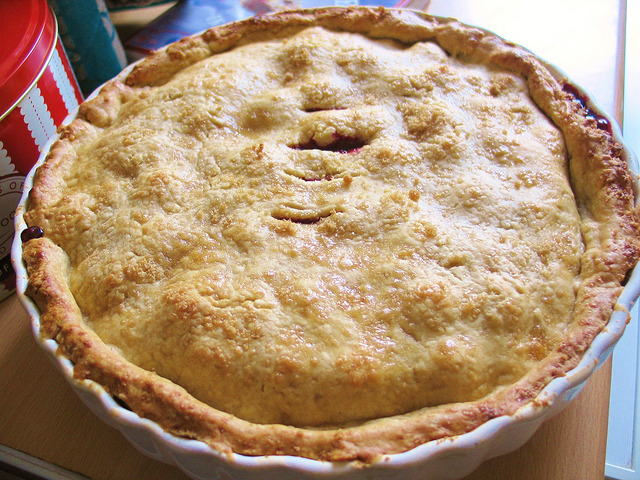
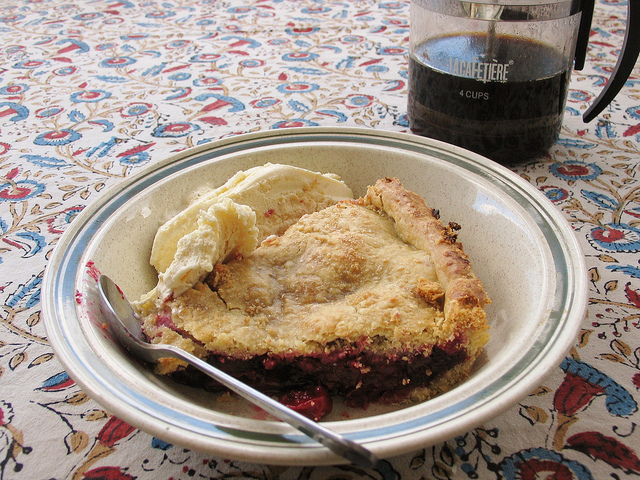
I recently discovered that the magical wonderland that is Real Foods stock frozen sour cherries, which basically made my LIFE. This week I baked the perfect (if I do say so myself) cherry pie, and Lovely Boyfriend and I got into Twin Peaks mode with pie and coffee.

252832

252933
Hanging out in my sweet flat
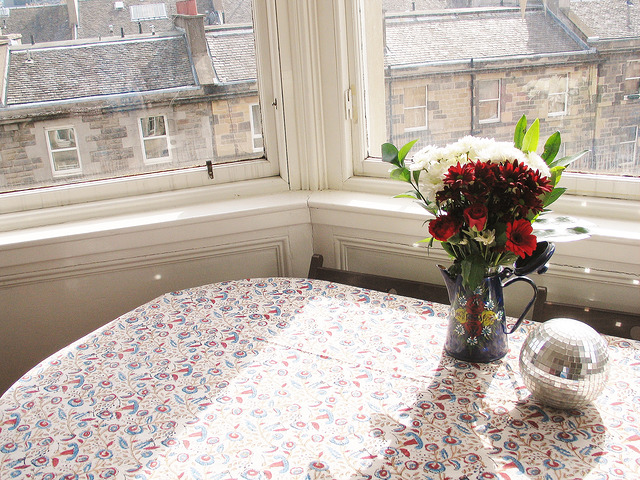
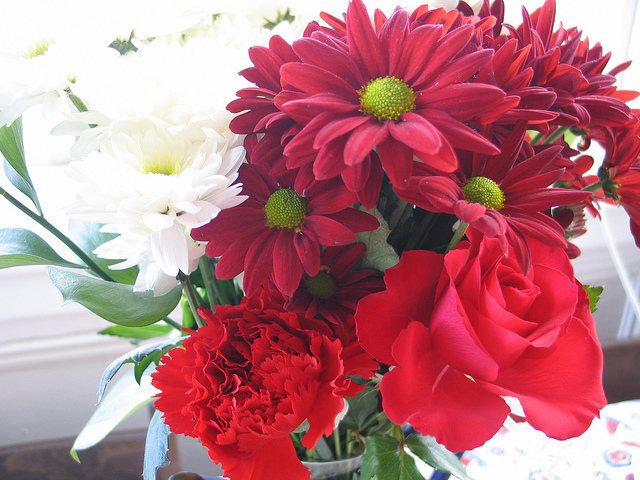
Lovely Boyfriend and I are probably moving house soon… I don’t want to jinx it, because we haven’t signed on the dotted line yet, but we’re kinda sorta buying our own house. Oh my goodness. But as excited as I am to have my own place — do a ton of decorating and have a veggie garden (!) and get a dog (!!) — I am also a little sad to leave my crows-nest of a top floor flat in wonderful Tollcross. So I’ve been trying to appreciate it and enjoy it while I still have it. Thanks so much to Kate for making my living room look extra pretty this week!

252927
Ooh! New tattoo?
My half-sleeve is finally totally 100% healed, which means it’s finally photogenic! This is obviously only a section of it, as it wraps most of the way round my arm, but you get the gist! It’s a psychedelically-coloured Oliver No.9 typewriter with the words O beautiful Garbo of my karma spiralling up from it on an On-The-Road-style scroll. The words are from Allen Ginsberg’s Kaddish, which is a contender for my all-time favourite poem ever.

252929
Hanging out in the Forest Cafe
Forest, I shall miss you too when I move away! (Don’t worry, I’ll still visit for sure.) Pretty much the absolute best place for people watching in the whole of Edinburgh. Also, cool murals with dragons in them.

252910

253033
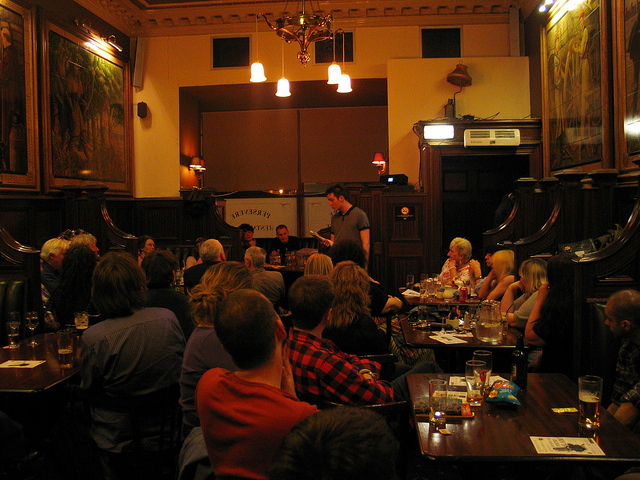
Packed poetry readings
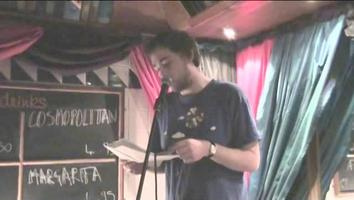
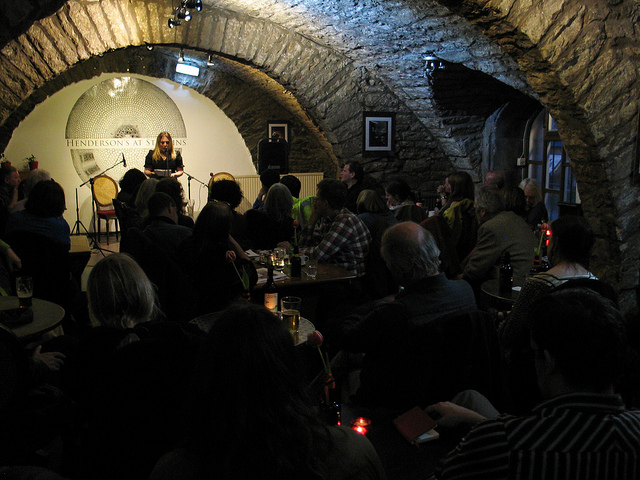
The first photo here is of the lovely Louise Peterkin, reading at the Shore Poets Open Night. She was absolutely brilliant, in spite of major technical difficulties, and as you can see, the audience is rapt! The second photo is my all-time favourite, Scotland’s most underrated poet (seriously), the great McGuire, bringing the awesome at the last ever Ten Red.

253024
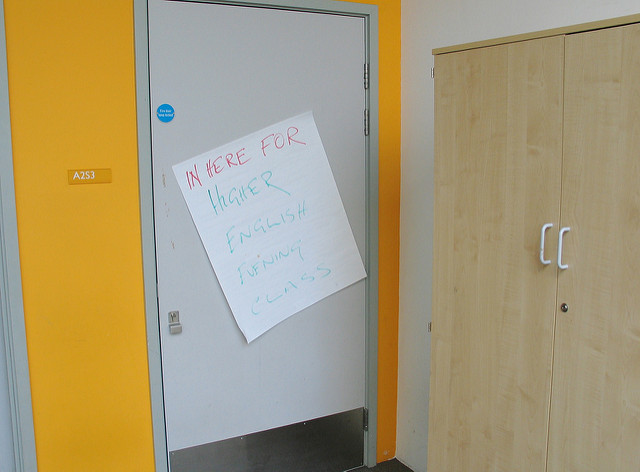
My students
Often puzzling, occasionally aggravating, generally excellent. Some of them (I don’t know which) stole this sign, which reads IN HERE FOR HIGHER ENGLISH EVENING CLASS, and placed it on the janitor’s cupboard door. Those pesky kids…

252957

253002

253017
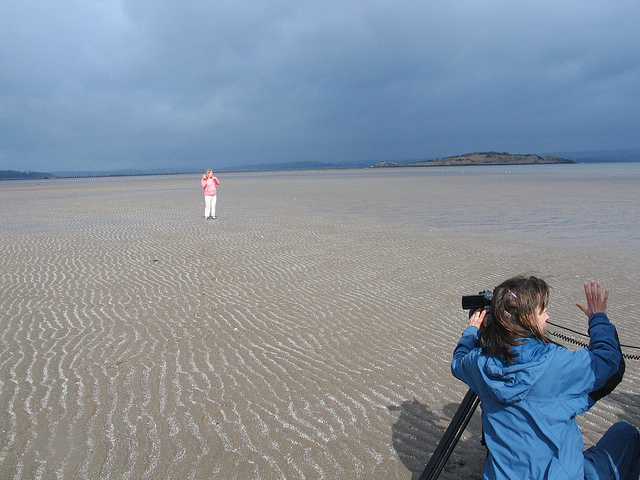
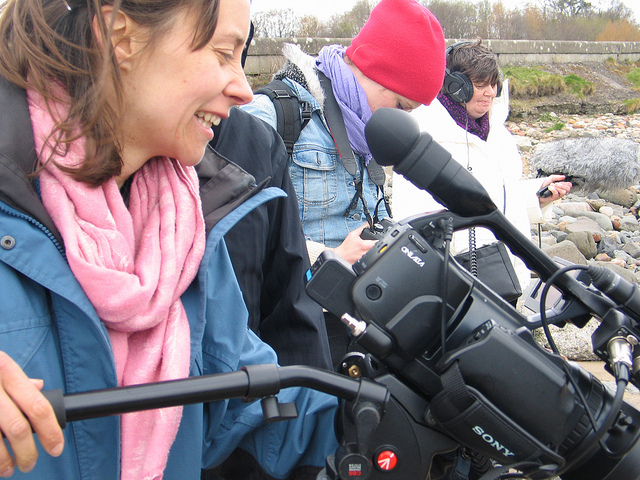
Filming for Making It Home
But the very, very best thing about my week was this: going out on set with some of the amazing participants from my poetry/film group at Women Supporting Women, to help them on their first ever filming session for Making It Home. We spent roughly five hours together, mostly on the beach under the most incredible volcanic sky, and I’ve never been so proud in my life. They were so confident and able, and such a great team — hard to believe that only a handful of months ago these women were intimidated by an Edwin Morgan poem! I felt like a bumbling idiot as I shuffled along in their extremely professional wake, mostly holding stuff! But so inspired and so, so proud.
There’s still a tiny bit of time left in our fundraising campaign, too: if you want to help these women to translate their experiences into a book that we can give out to the public for free and share their incredible journey, then please click here. Watch our video (bonus! derp-y shots of me), read about what we do, spread the word and, if you can, donate. I’ll love you forever!

What have YOU been loving this week?

*

Budding writer? Creative person in need of a fun job? Check out the various resources and services at Bookworm Tutors. Alternatively, check out Edinburgh Vintage, our sister site. If you want to get in touch you can follow OneNightStanzas on Twitter, or email claire[at]onenightstanzas.com. I reply as swiftly as I can!

Dear Poetry Newbies: what’s the deal with poetry readings?

Monday, February 4th, 2013

microphone

A previous version of this post appeared at One Night Stanzas in September 2008.

If you write poems, or if you’re interested in poetry, chances are you’re aware of the phenomenon of live poetry readings at some level. However, many young poets – even if they’ve been writing for ages – are fairly clueless about these events (because getting up and reading your own words to a room full of strangers can seem like total insanity!). If you’ve never performed at a poetry reading, and if you’re unsure about what they entail, take a look at this list and get yourself involved! The sooner you start reading your poetry to audiences, the better: fact. Why? Because live readings = four major advantages!

One: Live readings build better poems.
Reading your poetry to an audience can be extremely helpful when it comes to developing your personal poetic voice. Sometimes, what works on the page does not necessarily work when read aloud, so a reading can help you polish up a piece that you previously felt was finished… always a good thing! Reading aloud – and observing the reactions of your audience – also helps you to ‘inhabit’ a poem more fully; you’ll be better able to judge whether the poem’s tone or mood ‘works,’ for example, or whether your audience are convinced by a particular character you portray or a story you tell. Audience members will often seek you out afterwards to tell you what they loved about your stuff, too – make sure you listen to this feedback, because it can be extremely helpful! And even if you can’t use your audience to judge a poem’s ‘performance’ quality, you’ll often see and hear the best and worst bits of your poems much more clearly when you have to take them from page to performance. Reading aloud builds better poems and so I’d always encourage you to do it – audience or no audience!

Two: Readings help you conquer the world.
Reading your poetry in public – particularly the first time – can be very nerve-wracking. It doesn’t matter if you’re a daredevil extreme sports junkie or a budding thespian in your spare time; you’ll probably still find the idea of presenting your personal poetic creations to a potentially critical audience fairly terrifying. BUT! Don’t let the nerves stop you from going ahead with it, because once you’ve felt and conquered that fear, you can probably find the confidence to do anything! If you can step up onto a stage and read your stuff to an audience, then chances are a school presentation or daunting job interview should be a walk in the park! Reading your work builds your confidence massively, and gains you serious respect! The first time is always a scary prospect, but there are ways around this fear.

Three: You get your name in lights!
OK, so maybe not in lights, necessarily, but you get your name “out there.” In poetry, unfortunately, a big part of being successful is knowing and being known by the right people, so getting involved at readings can be the best way to make an impression. Even at small open mic gigs, there’s a chance you might run into a local magazine editor or poetry blogger, who might well give you a positive write-up or even ask you for a submission of work. Readings are fantastic for networking so make an effort to chat to people… and who knows? You could meet a future agent, editor, writing partner or publisher!

Four: Readings provide the three essential Cs.
Constructive criticism, contacts, and craic, of course! As I mentioned in point one, after you’ve got up and given your all, chances are you’ll get people coming to tell you what they thought. Don’t worry! You’ll rarely hear anything negative – even if you don’t feel like you did very well, you can guarantee that there’ll still be people who’ll want to tell you “that was great.” And why would they lie? This positive feedback is great for building your confidence, and improving not only your future performances but also the poems themselves. If you’re feeling extra brave, you can even ask people for details. Which poem did they like in particular? Which one was weakest? Was there anything they’d have done differently? Listen carefully to the answers you get, even if you don’t act on them.
The ‘contacts’ part doesn’t just apply to the editors and agents I mentioned in point three, either. Obviously, the people you’re most likely to meet at poetry readings are other poets! These are people who are into the same stuff as you, doing the same thing as you (and, you never know, possibly just as nervous as you, too!)… get talking to them, listen to their work, get their feedback. That’s where the ‘craic’ part comes in!

*

You can also visit Read This Press for more poetry (and typewriter paraphernalia!). Alternatively, check out Edinburgh Vintage, our sister site. If you want to get in touch you can follow OneNightStanzas on Twitter, or email claire[at]onenightstanzas.com. I reply as swiftly as I can!

(Photo credit)
Dear Poetry Newbies: 10 Poetry Myths You’ll Probably Have Heard

Monday, January 7th, 2013

An earlier version of this post appeared at One Night Stanzas in September 2008.

When I was a just-starting-out poet, I used to avoid telling anyone what my hobby was. Why? Well, because whenever I told anyone, all I ever seemed to get was negativity and disbelief. (”You write poetry?! Why?!”) Later, I realised that people react this way because over the years, they have come to believe in a whole load of poetic untruths… strange myths that have built up around the craft of creative writing, and poetry in particular. You’ve probably encountered some of the poetry myths below, so read on to see how you can beat them.

1: All poetry is boring.
You hear this all the time, and OK, it’s partly right - yes, some poetry is boring. I mean, I’m of the view that even the most notoriously “dull” poets (even my less-than-favourite, Mr Keats) were and are still capable of producing brilliant work, but that’s beside the point. The point is that most poems - and I mean at least 85% of all published poems - are far from boring. Some poetry is interesting because it addresses an issue, some because it uses language, form, rhythm etc in original and fascinating ways. Some poetry is interesting because it’s funny, some because it’s experimental. Some poetry is interesting because it’s just plain bad (check out William McGonagall’s greatest work, for example - it’s gained a reputation for being a really good bad poem… if that makes sense). But no one will ever know how interesting poetry really is unless they get out there and read it. So here’s a challenge: go forth and read poems, until you find one - any one - that you think is really interesting, for whatever reason. Buy the book, copy the poem out, or print it. Next time someone says to you “why do you like poetry? It’s boring!”, show them your ‘interesting’ poem, and explain why you think it’s awesome. Hopefully, it’ll open their eyes a bit!

2: Poetry is difficult.
When people say this, what they generally mean is that they’ve found a lot of the poetry they’ve encountered hard to understand. This may well relate back to their English class experiences, where pupils are generally taught to break down and analyse a poem, rather than just enjoy it. When people don’t know any better, they assume all poetry has hidden layers which need to be ‘de-coded,’ and that poems are designed to be a challenge. I like to point the ‘poetry is difficult’ crowd in the direction of Philip Larkin’s “This Be The Verse” (warning: strong language!), because it’s one of the most plain-speaking poems I’ve ever come across… I mean, what’s difficult to understand about that?! You might also want to keep a straightforward, what-you-see-is-what-you-get poem to hand, so you can easily bust this myth when you hear it!

3: Poetry is full of “deep meanings” and stuff.
This one is really popular, and can be tricky to bust. Because poems are so strongly associated with this process of studying and analysing, people don’t realise that, when they’re written, they’re supposed to be like any other piece of art - something for the reader to enjoy, essentially. There are a lot of poets around today who deliberately write poems that require no ‘analysis’ whatsoever - ‘accessible’ poems, where you can take just about everything at face-value. (The most high-profile writer and promoter of ‘accessible’ verse is probably Billy Collins, who writes poems about smoking cigarettes, forgetting things and listening to “Three Blind Mice”, among other things!) But you don’t necessarily need to hunt out a simplistic, accessible poem in order to bust this myth - any poem can be interesting and enjoyable, whether you know its deeper meanings or not. T S Eliot’s epic The Waste Land is stuffed with weird references and metaphors. If you don’t know what some of them are, that certainly doesn’t make you stupid… but it also doesn’t make the poem a total dead loss either. It is fine to read poems simply in order to enjoy the weird and wonderful sounds, words and phrases they make (”The corpse you planted last year in your garden, / has it begun to sprout?” or “at the violet hour” or “what the thunder said”, for example), even if you have no idea about the meaning. A poem is supposed to be enjoyed, so don’t sweat it!

4: Poems aren’t relevant these days.
I’ll admit that when people say this, I generally want to stamp my feet and yell ‘no no no no no!’ at them. This is a blinding untruth - there are heaps of poems which are so relevant to today. In fact, there are poems which even transcend time and space (no, really) - they’ll still be relevant in a million years time!
Firstly, there are loads of poets out there who write about our world and its happenings as they are right now - even as they happen. There are hundreds of poems about major recent events, and loads of poets inventing new styles for the 21st century (how about poetry based on Google searches?!). There are also poems out there which have been around for decades or even centuries, and which can still speak for all of us when we need them to. The film Four Weddings and a Funeral used a poem by WH Auden (written in 1938) to express grief at a modern-day funeral, for example (simultaneously making it one of the most popular funeral poems around), and that’s only one example of thousands and thousands of poems that can still communicate with a 21st century audience, regardless of when they were written. And thanks to the internet and other resources, poetry is more accessible, experimental and relevant than ever before… fact!

5: Writing poetry is a waste of time, because you can’t make a career out of it.
Er… what? Yes you can make a career out of it… people do. OK, not millions of people, but still, it’s not impossible. And not many people make a career out of, say, playing hockey, or knitting, or skydiving… but some people do. And we still play hockey, knit, skydive, and do a million other things, even though we know we may not make a career out of any of them. Would you tell a bunch of guys playing football at the park that they should stop doing it because they’ll never make a career out of it? No - so why is poetry different? Why is poetry only worthwhile if it generates income?!
I can’t answer this question - but I can tell you that it is 100% OK to write poetry, regardless of your reasons. Maybe you need a theraputic outlet for your feelings; maybe, like many people, you just can’t not write. Maybe it’s just a hobby you have… or maybe you do eventually want to try and make a career out of writing. As long as you set realistic goals for yourself and don’t allow other people to pressure or distract you, writing poetry is as natural an activity as playing sport or driving a car or being a compulsive shopaholic. It is never a waste of time. Ever.

6: Writing poetry is “emo.”
Personally, I don’t tend to dignify this kind of thing with a response. It comes in two forms from two different types of people. One: those who reckon that anyone (of any age) who writes poetry must also be histrionic and hyper-sensitive, and two: those who think that any young person who writes poetry is a nitwit, because “youth poetry” is for some reason associated with sobbing goths writing in their journals. Both of these standpoints are equally ignorant and ill-informed.
Basically, saying all poetry is “emo” (whether you mean “emotional” or “to do with emo pop-culture”) is a massive generalisation… and it’s a meaningless one, too. It’s like saying writing poetry is “gay” (even more ignorant!) or, I don’t know… “tall.” Does everyone who falls into a certain category write poetry? Nope. Does everyone who writes poetry fall into the same category? Er, nope. Is applying daft made-up categories to poetry something only done by idiots? You decide.

7: All poems are about love or death.
Or nature. Or war. Or space travel. Or animals. Or ghosts. Or crazy made-up creatures in their own fantastical world. Busted? I think so!

8: Poetry is for old people.
I’ve had cheeky students say this to me a time or two, and, although it’s not quite what they meant, they are sort of right. Sadly, there are people out there in the poetry community who don’t see younger poets as ‘real’ poets… TS Eliot once said that you can’t be a serious writer until you are at least 25, and lot of people believed him.
Viewing age as a deciding factor in how good someone’s poems are is prejudice, plain and simple… it is NOT something you should pay attention to. Poetry is an artform that’s open to everyone - regardless of age, gender, sexuality, nationality or anything else. You do NOT need to be on the planet a quarter of a century before you can write a poem (or understand one). Anyone can write poetry and anyone can read it, and I’m convinced that there’s a poem out there to suit everyone… not just old people!

9: All poetry has to rhyme.
I think this myth is less common than it used to be, but you do still encounter people who genuinely believe that if it don’t rhyme, it aint poetry. People who say this are similar to those who say things like “poetry is just prose with line breaks” (though a bit less annoying), and, as with the “poetry is difficult” myth, the best way to bust this one is just to produce some examples. Find a poem you love that does not rhyme. Tell the myth-confused person in question why it’s a great piece of literature. If you have to, find a dictionary definition of ‘poetry‘ for them to go with it!

10: No one reads poetry anymore.
OK, I saved the best til last. People LOVE to do this whole “poetry is dead” speech. Martin Amis even went so far as to say that poetry had died, been buried and had its obituary written. It’s probably the most common myth you’ll encounter on your poetic travels - it’s all over the press, and spun out by just about every miserable, procrastinating writer under the sun at some point. But guess what… it’s not true!
Heaps of people still read poetry. People still buy it, listen to it, go and see it live. And I mean thousands of people. Problem is, a lot of them are all the same kind of people…
Poetry has not died, but it has become a bit enclosed. The people who still take an interest in it tend to be poets, editors or publishers themselves, or people involved with academia - students, tutors and other scholars. Your average bricklayer or bank manager or nurse doesn’t tend to read poetry too often… and why? Because of the other nine myths, of course! People really do believe them!
But it is possible to get more people reading poetry. One: read poetry yourself. Buy poetry books, go to poetry readings. It helps the poets, the publishers, and your own writing, so what’s to lose? Two: keep writing. The more poetry there is, the more choice there is; the more evidence to contradict the myths that poetry is difficult, limited, boring, etc. And three: introduce people you know to poetry. Got a friend who’s fed up at work? Find a short, funny poem and text it to them with a quick ’saw this and thought of you.’ Email your partner a daft love poem. Make up a print-out of a load of your favourite poems as a present for someone you know. Write a poem to scribble in your granny’s birthday card. Hold a poetry reading in your living room and get all your friends to bring a poem each - be it one they wrote, or just one they like. Test people - ask them if they think these myths are true, and be prepared to bust any they say ‘yes’ to. You have the power to poem-ify people’s lives… just squash the myths!

*

You can also visit Read This Press for more poetry (and typewriter paraphernalia!). Alternatively, check out Edinburgh Vintage, our sister site. If you want to get in touch you can follow OneNightStanzas on Twitter, or email claire[at]onenightstanzas.com. I reply as swiftly as I can!

(Photo credit)

Stop presses! I am going to read some poems in some places!

Tuesday, November 20th, 2012

Happy Birthday, Allen Ginsberg!

Hey you guys. I know this basically never happens now (and — sshhh! — I actually kinda like that), but I am going to be reading Some Poems in Some Places over the next few weeks, and I just, you know, thought you might be interested in knowing about it. If so, read on. If not, go and make a cup of tea, or hug someone, or look at this cute panda, or do all or none of those things.

Shore Poets
Sunday 25th November 2012, 7.30pm

Henderson’s at St John’s, Edinburgh
I recently joined the Shore Poets committee, and I must say, I am loving being a part of what must surely be one of Edinburgh’s longest-running poetry nights. This month, my Shore Poet job is to read a set of poems, and I’m super looking forward to it, as this is my first proper poetry gig since before the summer. I’ll be guinea-pig-ifying the audience and offering up some hopefully tasty new poems to see what they make of them. If you fancy being part of this experiment, then come along! Doors open at 7.15, it finishes before ten (so you get to bed early), there’s cake for sale, and indeed a raffle where you could win FREE cake. If you don’t fancy the idea of listening to me waffle on, you’ll be happy to hear there are other, most excellent poets and some music. It’s a damn fine time and it costs a measly £5, or £3 for students.

The Edinburgh launch of Where Rockets Burn Through: Contemporary Science Fiction Poetry From The UK
Thursday 29th November 2012, 6.00pm

Blackwells, Edinburgh
My motto always used to be “never knowingly anthologised,” ’cause no one ever seemed to want me for their “young, upcoming, exciting poets!” type anthologies. I kinda liked the motto, actually, but then some people asked me to be in their anthologies and offered me some money, and you know, I’m a starving poet so OBVIOUSLY. And although I lost my motto, I did end up getting five poems placed in this badboy, a collection of stellar (har!) science fiction poetry from across the Universe UK. I will be reading those poems alongside some other very cool people (Jane McKie! Andrew C Ferguson! Pippa Goldschmidt! I’m exclaiming their names ’cause they’re fabby!), at this lovely free-to-attend launch. There’s a Facebook event here to tell ‘em you’re coming. There will PROBABLY be free wine. There will definitely be fun and frolics. I promise!

Book Week Scotland Pop-Up Festival
Saturday 1st December 2012

Mitchell Library (Cafe Bar), Glasgow
I’m really happy to be reading at the Book Week Scotland Pop Up Festival, which promises to be a day-long cavalcade of literary delights. It starts at 10am and goes on til late with all manner of cool and quirky stuff going on. My small role in all of this will involve sipping tea and reading some poems in the cafe bar with my fellow Scottish Book Trust New Writers Award recipients. This will be happening sometime between 4pm and 5pm. I’m extra psyched because we’ll be joined by the World’s Greatest Compere (really) Ryan Van Winkle, without whom no poetry show is quite complete. Seriously, it’s worth the train fare to Glasgow for a glimpse of his beard alone. Here’s the Facebook event. Please do come along and sip tea with me!

Want me to come and read at your event? I MIGHT JUST SAY YES! Catch me in the comments box or use the email address below!

*

You can also visit Read This Press for poetry and typewriter paraphernalia! Alternatively, check out Edinburgh Vintage, our sister site. If you want to get in touch you can follow OneNightStanzas on Twitter, or email claire[at]onenightstanzas.com. I reply as swiftly as I can!

(Photo credit)
Things I Love Thursday #65

Thursday, October 4th, 2012

Vegan profiteroles

Yet more vegan baking.
I know, there’s a trend developing here. But LOOK AT THOSE CINNAMON ROLLS, PEOPLE. This is about my seventh time making them, and I think I have now got them perfect. The recipe is Isa’s, but I’ve tweaked it and meddled with it and now I’ve got something that suits me and suits my old-as-time-itself oven. Woo!
The other things are VEGAN PROFITEROLES! YET MORE ALL CAPS BECAUSE OMG! I am extremely proud of myself, because I came up with the recipe for these all on my own, which is pretty much a first. They’re basically a sweet, veganised version of this choux-like pastry I used to make to go on top of a vegetable bake. I promised folk on Twitter that I’d put the recipe up here today, BUT I think I need (need!) to make them again just to make sure this wasn’t a fluke. But look for the details next week!
(Like the mug? It’s for sale at Edinburgh Vintage!)

Cozying up.
Lovely Boyfriend and I have been in our awesome Tollcross flat for over a year now. I love it, but I’ve always been a bit bugged about the bedroom: it’s always felt kind of impersonal and functional, and I wanted to find a way to make it cozier. So over the weekend I shifted the bed, gathered together several of our many bookshelves into one corner, and created a little reading nook. Now I love it and want to be in there all the time! Win!

Splashes of colour.
I’m really getting into this classic blogger thing of taking lots and lots of macro photographs of whimsical stuff. My apologies, I am becoming a cliche. But anyway — the top photograph is of my jewellery box, which is in desperate need of a tidy-out! The bright-orange sticker I got in a radical book collective in Seattle, and it reads ABORTION ON DEMAND AND WITHOUT APOLOGY. Because um yes, obviously.
And below that is a little pink typewriter that I keep passing on my wanderings… it’s sitting in the window of Owl and Lion on West Port. I always give it a cheery smile as I pass.

Anniversary!
Lovely Boyfriend — aka Captain Steve — and I celebrated our two-year anniversary this week. We’re heading to Paris in about ten days to continue the celebrations and I am already going nuts with excitement. On the same day I also wandered into Red Hot + Blue Tattoo in Tollcross and had my seventh tattoo inked — a hand of protection, loosely based on a hamsa or Hand of Fatima. My tattooist was Alec, and he was great — thanks, I love it!

The Spoken Word.
The British Library were kind enough to send me this great three-CD boxed set of modern poets reading their work to feature at One Night Stanzas. It’ll be given away to one lucky reader next week, so stay tuned! If you want more info in anticipation, you can see the details at the British Library Shop page!

What are YOU loving this week?

*

You can also visit Read This Press for more poetry (and typewriter paraphernalia!). Alternatively, check out Edinburgh Vintage, our sister site. If you want to get in touch you can follow OneNightStanzas on Twitter, or email claire[at]onenightstanzas.com. I reply as swiftly as I can!

Check the ill Q&A behaviour

Wednesday, September 5th, 2012

366 - 350: You can't shut me up

I’ve been to a whole load of readings and other author events this Festival – avoiding as I am every aspect of the white, male, thirty-something, rape-joke-cracking comedy side of things. And although I’ve had a creeping sense of this for a while, this Festival season it has really struck me just how badly people behave in post-reading Q&A sessions.
It’s got to the point where, on the rare occasions that the event’s chair announces that there will not be a Q&A session afterwards, I feel a palpable surge of relief. You’d think that good behaviour – particularly at a set-up as supposedly erudite as the Edinburgh International Book Festival – would be a no-brainer. But apparently not – it’s more likely to be a free-for-all of terribleness. Therefore, let me share with you my no-shit-Sherlock rules for good Q&A behaviour, wherein I will also share some of the horrors I have been [un]fortunate enough to witness.

1. It’s a Q&A… so ask a damn question
The clue to this one’s in the name, folks – question and answer. Seems straightforward, right? And yet, the most commonplace Q&A sin is most definitely Question Fail. The non-question usually comes from someone whose hand shoots up in a Donkey-from-Shrek gesture. And you can tell as soon as they start that there is no question at the end of their faltering verbal rainbow. They start with “I’d just like to say…”, or “Isn’t it interesting how…”, or sometimes “You’ve just got me thinking about…” And after a while it becomes apparent that they don’t actually want to ask anything. The speaker nods politely along, perhaps trying to engineer a possible response in spite of the fact that the non-questioner doesn’t really want one. The non-questioner just wants the microphone. And yaknow, we’ve all paid ten quid for the privilege of hearing from the speaker. Please ask them something so they can say interesting things to us!

2. It’s not all about you.
A greater awareness that there are other people in the audience would serve a lot of questioners well in general. I’m speaking now of those people – some of whom have real questions and some of whom don’t – who see the Q&A session as an opportunity for them to have a private one-to-one conversation with the speaker. They ask a (non-)question, the speaker responds, and then instead of surrendering the slippery, sweaty roving mic to the next eager hand-waver, they respond back – sometimes numerous times and often at length. Admittedly, there are some event chairs who won’t allow this sort of behaviour and who will attempt to head these me-me-me types off at the pass. But this is Blighty after all, and many chairs and speakers will simply nod politely as the precious seconds of the often-too-brief Q&A tick by. Again: dude, I have spent a whole piece of paper money to come to this event. I did not spend that money so I could hear you chat about how much you liked the voice-acting in Brave (this really happened) with a speaker whose topic had absolutely nothing whatsoever to do with Pixar’s totally-not-a-princess-movie. Please be quiet now. (Although yes, Brave is great. Just not now.)

3. ’splaining is never acceptable…
…especially when you are talking to someone who is an expert in their field. Seriously: I can never understand folks who’ll wait until the speaker has finished unpacking years of research on a subject obviously close to their hearts before reaching for the mic and saying “actually, x is totally untrue! I read an article about it in the Telegraph!” Some cases in point: Marina Warner is one of the world’s greatest and most knowledgeable scholars of myth and folklore. She’s been publishing on the subject since the mid seventies. What this woman doesn’t know about folklore doesn’t exist. And yet, at the end of Warner’s brilliant lecture at the Book Festival, a woman raised her hand to say, “I don’t know if you realise this, Marina, but Scotland has a very vibrant culture of folklore and storytelling!” Dude. It’s Marina freaking Warner. I guarantee you she knows.
I witnessed another example of ’splaining at Alice Oswald’s truly incredible Book Festival reading. There was no Q&A session, but punters were encouraged to bring questions to Oswald during the signing. The signing queue was huge, it was 10pm and poor old Alice had just read non-stop from memory for an hour and twenty minutes. Needless to say, she was obviously exhausted. And yet, a bloke in the signing queue in front of me had no qualms about stepping up to the table to tell her all about the good old days of his own Homeric studies as an undergrad at Oxford, and by the way, did she know x and y about Homer? The woman is an expert, man! She knows.
Finally – and I really thought that in terms of ’splaining, by now I’d seen it all – at Andrew Keen’s Book Festival event, a truly ’splain-tastic gentleman spoke up at the back. Keen had just finished discussing the possible dangers of social networking for young people, a subject that his two nonfiction works have examined at length. After slagging both books horribly (and I’ll return to this in a moment), the gentleman pointed out that, “according to studies” (BECAUSE OF REASONS!), young people are highly responsible users of social media and only ever ‘friend’ people they definitely know IRL. He actually said, his white beard shuddering with indignation, “I know how young people behave, and you’ve got them completely wrong.” As a young person myself (who has nearly 2,000 Twitter followers and not a clue who most of them are), and a FE lecturer who teaches over 150 young ’uns a year (all of whom talk about “some random on my Facebook,” etc), I must say to you, sir: you are embarrassing yourself.
Everyone else: please do not be this person.

4. Do not slag the book.
I’ve witnessed this more times than I care to mention, yet I still do not understand the logic. Before the white-bearded ’splainer above began telling everyone in Edinburgh all about How Young People Behave, he first launched a massive tirade against the speaker, his books, and everything he stood for. He began with, and I quote, “I read your first book and frankly I thought it was a shoddy piece of work” (cue a lot of booing and hissing-through-teeth from the audience), before adding, “and I totally disagree with everything you say in this new book!” Happily, Andrew Keen is a long-time Silicone Valley insider, and about as hard-boiled a speaker as you get at the Book Fest, so without batting an eyelid he responded, “so you’ve read the new book, then?” When Beardy McSplain had to admit that he had not, Keen continued, “well, you’re not putting yourself in a desperately credible position, then, are you?”
However, I have seen authors panic in the face of their book being wantonly slagged in the Q&A. In an event at the Book Fest last year, the author – who I won’t name – faced a screeching elderly woman in the front row telling her that In My Day Women Like You Would Have Been Called Lazy Sluts, or words to that effect. The poor woman was just open-mouthed with shock, as were the audience.
The reason I don’t understand people who publicly attack the book (or the author) is not because I think the authors shouldn’t have to deal with it. Personally, I see hecklers as part of the public reading territory and almost relish the challenge they provide (I’ve never been called a lazy slut, though, I suppose). No, the reason I don’t understand it is this: if you hate this person and all that they write about/stand for so much, why the everloving hell have you spent ten whole pounds to come to their event? That’s two and a half pints, or a good novel, or four copies of the Big Issue! Folks – do everyone in the world a favour, stay home and give that money to a deserving charity.

5. Wait to be asked.
Just a piece of common courtesy, this. I was at an International Festival event the other day – a panel discussion featuring three academics and the chair. It became clear towards the end that the chair was trying to wrap things up for questions, but before she had even finished speaking, an extremely rude man in the front row threw out his arms towards the panel and boomed, “SO LET ME ASK YOU THIS, THEN…” Happily, the chair cut in and demanded that a) be quiet until she was done and b) he wait for the roving mic (although he really didn’t need it) – but even so, I was gobsmacked. I mean, I’ve asked questions in Q&As before – I do so quite regularly – but there is no way in hell I would ever take it upon myself to decide that I was sick of listening now and HEY LISTEN TO ME INSTEAD! Ladies and gents – be nice. Wait til you’re asked. This is the literary world, we’re civilised here! Aren’t we…?

Right – now I want to hear your horror stories. I know you’ve got them! Have you come across someone even worse than Beardy McSplain? Tell me in the comments box!

*

You can also visit Read This Press for more poetry (and typewriter paraphernalia!). Alternatively, check out Edinburgh Vintage, our sister site. If you want to get in touch you can follow OneNightStanzas on Twitter, or email claire[at]onenightstanzas.com. I reply as swiftly as I can!

(Photo credit)

In search of the perfect coffeeshop.

Monday, September 3rd, 2012

Over the summer I was teaching creative writing at the Scottish Universities International Summer School. All our lovely students were from overseas and most of them had never been to Edinburgh before. The festival was in full swing, they were all finding the course extremely intensive (’cause it really, really is — but in a fun way!), and scrabbling around for a free hour or two each day to write. And they were all asking me the same question: which Edinburgh coffee shops are the best for writing in?
Weirdly, this all coincided with my procurement of a copy of David Mamet’s Make-Believe Town — a collection of essays on everything from what David Mamet thinks of screenwriting to what David Mamet did during the 1995 deer hunting season. Now, (< — classic Mamet start to a sentence right there) I love David Mamet a whole load. Although I have yet to see or even read one of his plays, his non-fiction is just so up my street. And there is one essay in this particular collection that not only spookily amplified my students’ questions… it also made me snort-laugh, and in places, nod furiously.

The essay is called “The Diner”, and in it, Mamet asserts:

“Writing, in my experience, consists of long periods of hanging out, punctuated by the fugue of remorse at the loss of one’s powers and wonder at occasional output in spite of that loss.”

This is my personal writing process in a nutshell, and so I was extremely excited when Mamet not only endorsed the behaviour I shall henceforth refer to as “hanging out” (rather than “dicking around” or “procrastinating”, which were the terms I used to use) — he actually suggests that it is a necessary and perhaps even vital part of being a writer. “We’ve got to write, and to read, and to do so, we get out of the house and get into the coffeeshop. [...] We, readers and writers, must hang out.”

And it has to be the coffeeshop. After all,

“Where else would one go? The Lounge seems to have degenerated into the Sports Bar, that is, a spot one can go to watch television. That is not hanging out; no: we cannot say it. [...] That frantic and forced consumerism of the Sports Bar will not do; neither what has become the muddled and tense obsequiousness of that proclaiming itself the Restaurant. No.”

It has to be the coffeeshop. The coffeeshop, as Mamet points out (and this is one of the parts where I furiously nodded), is more than just an establishment that sells hot, usually-brown-coloured beverages. It is a refuge for those of us who are stupid enough to have decided to dedicate our lives to the creative arts, and who therefore have little money and not much of a plan and who need a safe place to go, where we won’t be judged by normal people or told to get a real job.

“In larger towns we’ve seen the budding writer at his or her table, frowning into a notebook; and in the cities themselves, the actor and actress with their flimsy scripts — outsiders all, at home in the diner, coffeeshop, cafe.”

Having read this essay (three times, enthralled, as I almost always am by Mamet’s ramblings), I started trying to think about coffeeshops of my acquaintance that particularly lend themselves to hanging out, especially writing. I was spectacularly failing to help my students with their questions, telling them that during the Festival most of the city centre coffeeshops are out — too busy and noisy — and that they should wander Stockbridge, Bruntsfield, Morningside, Leith, and find their own preferred spots. I realised that Mamet gives numerous examples of coffeeshops across America that he thinks make perfect “hang outs” (in fact, one very sweet and only-ever-so-slightly creepy blogger made a pilgrimage to one of them)… but he gives very little information on what, exactly, might make a certain coffeeshop more conducive to hanging out than others in the same town. He mentions only that they are places “of reading, writing, gossip, mutual observation”, and that ideally, there should be a “beautiful plastic covered menu,” made all the more beautiful if it includes “that most liberal phrase, ‘Breakfast Served All Day’.” To be honest, that doesn’t give me much to go on. But I think, from the general gist of the essay, that the ideal writing coffeeshop hang-out should provide the following things:

- an atmosphere that somehow wordlessly conveys to you that once you have bought your one cup of coffee, you can sit and read/write there for as long as you like without disturbance/expectation of further purchases
- music that is not going to bug you… but probably not no music at all, as that’s a bit weird
- an unspoken hostility towards yummy mummies and their unsupervised buggy-mewling brats (so pretty much any Costa is immediately ruled out)
- long-serving staff who know your “usual”, and who aren’t hipsters
- a conspicuous absence of wifi or wall-sockets (Mamet does assert, “can we take our computers there? Thankfully not.”)
- a total ban on TV of any kind
- people-watching opportunities

(Personally I’d also add: tables that are the correct darned height for a seated human adult; soya milk at no extra charge; juice, not smoothies; properly late opening hours; dim lighting, and booths. Oh my goodness, booths. But yaknow, that’s just me.)

Based on these criteria, I had a sudden, terrible realisation. There are so few proper, decent hang-out spots in Edinburgh that I am actually a bit embarrassed on Edinburgh’s behalf.

There are a few contenders. Word of Mouth, just off Leith Walk, is pretty fabulous, though small. They’d make my list. The Cameo Bar might, too, but it depends on the time, the day and whether or not a big movie is opening. The new Forest Cafe on Tollcross Junction ticks the box for their one-cup-of-tea-and-you-can-stay-all-day vibe… that’s rare these days, so props, Forest. Unfortunately, they do lose out on the music front. Sometimes it’s super-chilled, one-man-and-his-uke stuff, which is perfect… then other times it’s an actual member of staff actually banging his actual fists on an actual piano two feet from your actual head while you’re trying to write. Just no.
Then there’s Black Medicine. There are three in Edinburgh. The biggest, on Nicolson Street, instantly loses out because of its pot-luck weird-ass music, and its UBERHIPSTER counter staff (anyone else remember the days of Kyle and Kyle? I had such a crush on the dreadlocked Kyle. It was WAY more of a hang-out in those days). The Marchmont one has been found by the yummy mummies and the laptop wankers. The newest one, Tollcross, is definitely the most promising (one of the veteran BM staff still works there! Hello, twin mohawk guy!) and may actually make my hang-out list. Soya milk’s extra, though. Boo!
Where else? City Cafe on Blair Street is technically a bar, but they have booths and dim lighting and candles and some of the staff are hot, friendly chubby tattooed girls. Unfortunately, there are TVs. Schoolboy error, City Cafe. Remember before you decided to go for a revamp and become a pseudo fifties diner? YOU WERE WAY MORE AWESOME THEN. (Also, since when did fifties diners have huge-ass TVs almost always showing the BBC News 24 channel? Illogical, Captain.)
And then I kind of run out of options. Cafe Class, also on Tollcross Junction, is cool, but you feel like you have to order more stuff if you sit there a long time. At Kilimanjaro on South Clerk Street once, one of the waiters actually demanded that my friend and I order more drinks after less than an hour, so screw you, Kilimanjaro. Favorit used to be freaking amazing (open til 3am on weekends!), but then it changed hands and now seems to be trying to imitate a Caffe Nero. And the Filmhouse Cafe-Bar is cool, but EVERYWHERE YOU LOOK there are TV screens showing mesmerising trailers for artsy movies, meaning concentration on what you’re doing (reading, writing, conversing, eating their delicious chickpea curry) is pretty darned tricky. And… that’s it. Only two (maybe three. Maybe) real proper definite hang-outs in the whole of Edinburgh.

Given that David Mamet has informed me that hanging out is, in fact, a legitimate — nay, important — activity for the budding writer, it is now really rather important that I find suitable venues in which to partake of it. Therefore, I want to hear about your hang-out spot. I don’t mind where you live — I might be coming to your town someday, and this is vital information I will need to know. I already know of one or two good international hang-out spots… the Bean Around The World in Victoria, BC, for example, might well be the best hang-out in all of Canada. But I am hungry for more! Particularly if you know of hang-outs in Glasgow, London, Portland OR, Barcelona, Krakow, San Francisco, Oslo or Vancouver (these are all places I either really love and want to go back to or am visiting sometime soon). You can also totally please yes do tell me what characteristics your ultimate writing hang-out needs to have. As Edinburgh is so surprisingly poor on the hang-out front, I may need to start my own coffeeshop just to meet demand…

Get thee to the comments box!

*

You can also visit Read This Press for more poetry (and typewriter paraphernalia!). Alternatively, check out Edinburgh Vintage, our sister site. If you want to get in touch you can follow OneNightStanzas on Twitter, or email claire[at]onenightstanzas.com. I reply as swiftly as I can!

(Photo credit)

Things I’m Reading Thursday #33

Thursday, May 24th, 2012

(This post should perhaps be called, ABSOLUTELY ESSENTIAL READING FOR ALL POETS, GO AND BUY THIS BOOK NOW.)

.

As you probably know, I am a huge fan of the great Adrienne Rich, and was truly saddened to hear of her death a few weeks ago. Last Wednesday would have been her 83rd birthday.

I’ve been writing about Rich’s ideas — specifically, her ideas about the lack of a literary tradition for female writers — in my PhD thesis, and so when I was given book vouchers for my recent birthday I decided to spend them, partly, on a Rich-penned collection of essays I’ve been wanting to read for ages:

What Is Found There: Notebooks on Poetry and Politics.

Thanks to my other reading of books by and about Rich, I already knew that she has the uncanny ability to take something you’ve never really thought about — because you thought you understood it — and to make you see it in such a new and different light that you feel your head might turn inside out. That happened so many times for me, with this book. Rich’s writing on the process of creating poetry is also among the best and truest I’ve ever seen from anyone — only Margaret Atwood’s Negotiating With The Dead can beat this book for sheer, “yes! That’s exactly what it’s like!” value. Rich is great at taking what you or I might see as guilty little writer’s habits — procrastination, self-doubt, unwillingness to start on a project if we’ve got other things on our minds — and legitimising them, saying “this thing is a necessary part of the writing process and we must embrace it.” From start to finish I was edified — this book made me so happy. It all felt so utterly relevant me, as a poet, as a teacher, as a politicised person. I found myself repeatedly folding over pages to return to later, grabbing my neon-pink highlighter to block-mark huge passages that just made so much sense.

Instead of gushing further, I’ll share just a few of those block-marked passages with you now, and you can see what you think…

On the invisibility of poetry
“Poetry itself, in our national life, is under house arrest, is officially “disappeared.” Like our past, our collective memory, it remains an unfathomed, a devalued, resource. The establishment of a national ‘Poet Laureateship’ notwithstanding, poetry has been set apart from the practical arts, from civic meaning. It is irrelevant to mass ‘entertainment’ and the accumulation of wealth — thus, out of sight, out of mind.” (p. 20)

On why poetry being invisible is a good thing
“And perhaps this is the hope: that poetry can keep its mechanical needs simple, its head clear of the fumes of how ’success’ is concocted in the capitals of promotion, marketing, consumerism, and in particular of the competition — taught in schools, abetted at home — that pushes the ’star’ at the expense of the culture as a whole, that makes people want stardom rather than participation, association, exchange and improvisation with others. Perhaps this is the hope: that poetry, by its nature, will never become leashed to profit, marketing, consumerism.” (p. 40)

On free time as a necessary ingredient in the making of great poetry
“Most of the poets I know, hearing of a sum of money, translate it not into possessions, but into time — that precious immaterial necessity of our lives. It’s true that a poem can be attempted in brief interstitial moments, pulled out of the pocket and worked on while waiting for a bus or riding a train or while children nap or while waiting for a new batch of clerical work or blood samples to come in. But only certain kinds of poems are amenable to these conditions. Sometimes the very knowledge of coming interruption dampens the flicker. [...] Most, if not all, of the names we know in North American poetry are the names of people who have had some access to freedom in time.” (p. 43)

On why the idea of poetry as ‘academic’ is a lie
“It’s a lie that poetry is only read by or ’speaks’ to people in the universities or elite intellectual circles; in many such places, poetry barely speaks at all. Poems are written and absorbed, silently and aloud, in prisons, prairie kitchens, urban basement workshops, branch libraries, battered women’s shelters, homeless shelters, offices, a public hospital for disabled people, an HIV support group. A poet can be born in a house with empty bookshelves. Sooner or later, s/he will need books. But books are not genes.” (p. 206-7)

On good poetry as a rejection of hatred and competitiveness
“To celebrate, to drive off evil, to nourish memory, to conjure the desired visitation. The revolutionary artist, the relayer of possibility, draws on such powers, in opposition to a technocratic society’s hatred of multiformity, hatred of the natural world, hatred of the body, hatred of women and darkness, hatred of disobedience. The revolutionary poet loves people, rivers, other creatures, stones, trees, inseparably from art, is not ashamed of these loves, and for them conjures a language that is public, intimate, inviting, terrifying, and beloved.” (p. 249-50)

Go buy this book.

*

You can also visit Read This Press for more poetry (and typewriter paraphernalia!). Alternatively, check out Edinburgh Vintage, our sister site. If you want to get in touch you can follow OneNightStanzas on Twitter, or email claire[at]onenightstanzas.com. I reply as swiftly as I can!

(Photo credit)