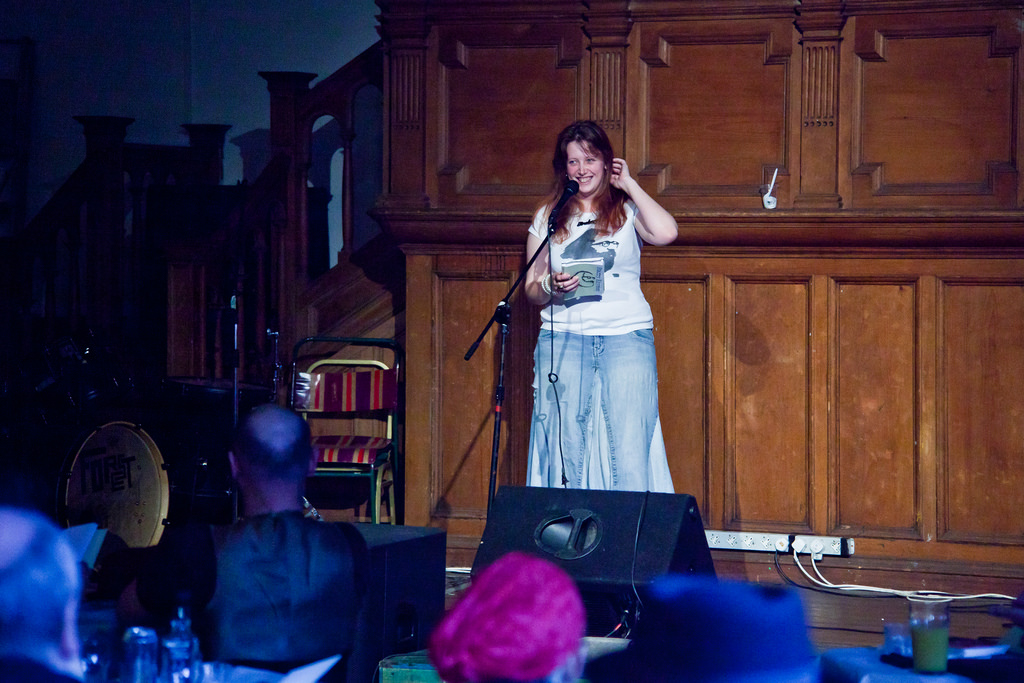
A trip to Millom… and a poem for Norman Nicholson.
Tuesday, May 26th, 2015I don’t usually post my own poetry on this blog*. To do so would be considered ‘publication,’ and mean that any poem I posted here would be one less for me to send out to magazines, journals or contests. That’s not me being over-protective, I promise: I just write slowly. I need all the material I can get, if I am to successfully follow the Jo Bell Method!
However, I have been aware that new folks coming to this blog will easily get a sense of things like how much I love cake, what kind of books I read and how often my writing time is interrupted by procrastination… but they might not get a sense of the sort of poet I am. I ought to give people at least a few hints. Also, this weekend I wrote something I thought might especially suit this blog, which often acts as a place to recap my adventures. This poem is partly about a recent adventure, so… here it is!
This weekend I visited Millom for the first time. Cumbria is one of the places I call ‘home,’ yet I’ve spent very little time exploring anything west of Coniston Water (partly because I often rely on public transport). But West Cumbria — although geologically very different to the lake country, and much more industrial — has many charms, and I have been particularly keen to visit Millom as a pilgrimage to one of my now-favourite poets, Norman Nicholson. Norman was a self-identified ‘provincial poet,’ who fought his entire life to be recognised by a literary establishment that scoffed at him for staying in his little Cumbrian town and writing about the concerns of the working class people — mostly iron miners — who lived there. I find his life story, as well as his poetry, extremely inspiring, so went looking for him, and wrote this. Bear in mind… it’s still new!
*
A day’s work
for Norman Nicholson
I drive through villages
called The Hill and The Green,
by the prison, follow
the sandbagged, tidal river
and arrive in Millom.
From owert top in a hot
May, Black Combe was not
the Mordor you’d described.
The estuary lopped off the land
in a big V. My mother had warned,
it’s still a bit spit
and sawdust out that way.
My ancestors, the not-all-that-
long-ago Coles, lived locally
for the ironworks your poem
dismantled famously.
From the pavement, I see
the brickwork in your window’s
shot; the cafe now living
in your shopfront is shut;
your blue plaque a bit gubbed
with rust and gull shit;
the library’s Norman Nicholson Room
one shelf and a sign.
This is Cumbria, like you
always said: keep your daffs,
your Windermere, your slim
white boats and Londoners,
this is it. The women
in the churchyard say
he never did a day’s
work in his life, when I
mention your name, their town’s
most famous son. I looked
for your grave so I could say
Norman, nothing’s changed —
the Coles all died young,
and pattern this hillside
like earthworks, stubborn
old roots — but the women
don’t know exactly where
you are. Just that you’re off
up the top somewhere,
in a plain spot, looking out.
*
Some of the Nicholson-related things I saw on my Millom trip…
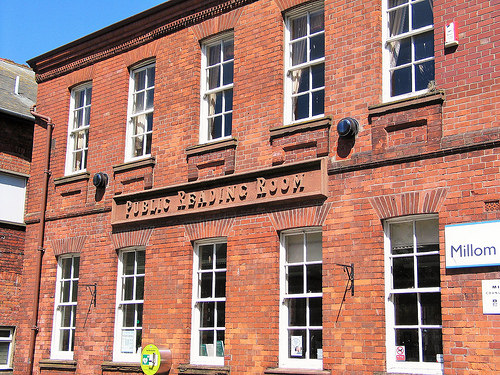

As well as being ill-received by some in the literary establishment, Norman also pissed off council officials and local hob-nobbers by writing candidly about things like the Windscale disaster and the closing of the Millom ironworks. As a result, a posthumous campaign to name the Millom Reading Rooms after him was repeatedly denied… but a compromise was reached in the form of the Norman Nicholson Room, which is inside.

Iron mining was hard, horrible work that killed a lot of people. This monument in Millom’s town square recognises this fact… and includes a plaque to Norman Nicholson, too, though the townspeople do (or at least, did) think he was a layabout who needed to do a day’s work! (Probably true of most poets, right?)
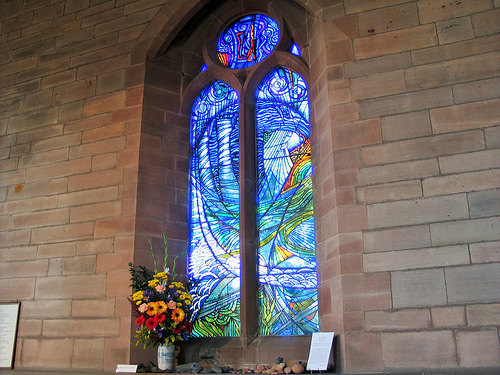
I really did fail to find Norman’s grave, in spite of the vague directions given to me by a gaggle of local ladies who were manning a flower display in the churchyard! However, I did get to see his memorial window, which is absolutely stunning and includes lines from his poems.
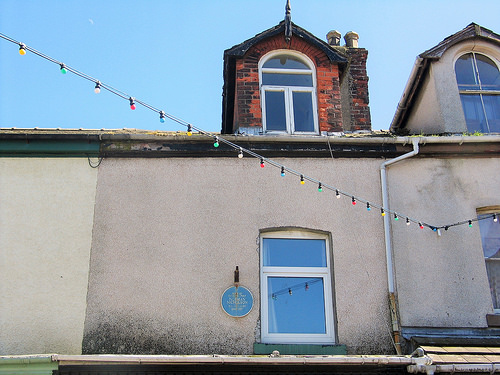
Here’s the house Norman lived in from his birth until his death. He wrote all his poems in the little stick-up room at the top. The blue plaque describes him as ‘a man of Millom.’
*you can see a list of my poems in other places, though, by clicking here.
Like shiny things? Check out Edinburgh Vintage, a totally unrelated ’sister site’ full of jewels, treasures and trinkets. If you want to get in touch you can follow OneNightStanzas on Twitter, or email claire[at]onenightstanzas.com. I reply as swiftly as I can!