Posts Tagged ‘help’

Dear poetry newbies: are you ready to workshop?

Monday, January 6th, 2014

A version of this post first appeared at One Night Stanzas in October 2008.

What does workshopping involve?
Basically, workshopping is about testing your work out on other writers to see how successful it is, and getting an idea of how your audience will approach it. It’s a tool used by writers of all kinds - from people who pen corporate business documents to playwrights and even musicians. Usually, you get together with a bunch of other poets, and you each read a sample of your work to each other (often, the rest of the group will already have read and thought about your chosen pieces - most workshops I’ve been in have circulated a ‘reading list’ by email a few days before the workshop itself). Each member of the group then offers feedback and constructive criticism on your work, and in turn, you give your thoughts on their work. It may sound a bit scary, but workshops are generally small, relaxed groups were just about anything goes, and they create a safe environment where you can test out poems you’re not too sure about before you unleash them onto the general public!

How does workshopping benefit my poetry?
Sometimes it’s hard to know what to do about your poems once you’ve finished them. Editing is a tricky business - the more you look at a poem, the less you can see how to change it (you know how you never notice your own typos? It’s a bit like that). You become so familiar with your work that the only thing you can really do is squirrel it away for a couple of months in an attempt to then come back to it with fresh eyes, but this is tricky and takes a long time. The other people in your workshop can provide those fresh eyes for you.
Your workshop group can tell you exactly what about your poem “needs work” when you can’t see it yourself. It might be your handling of punctuation, a dodgy rhyme scheme… whatever. Your group can offer in-depth criticism, right down to the smallest comma. Workshop groups are also useful when it comes to keeping your poems clear. It’s easy to get caught up in your own head, where every image in every poem makes perfect sense to you. However, workshopping provides a handy reality check - your group may well turn around and say “I didn’t understand what was going on in this poem.” That may sound like a harsh comment, but it’s important that your readers feel able to get involved with and relate to your poems. Your workshopping group is your barometer when it comes to things like this - they’re like a small panel of poetry readers, only better. They write too, they suffer from typos and mess-ups and rejections too, and they want to help you… for free!

How do I know if I’m ready to workshop?
This is a tricky one. If you’ve never workshopped before, your first time can be rather weird, intimidating and even a bit disheartening. You have to bear in mind that you’re putting your work into the hands of other people and essentially saying, “here’s my poem - do your worst.” You’re laying yourself open to criticism, and whilst it should all be constructive, when several different voices are all pointing out issues in your work, you can end up feeling a bit like you’re under attack.
Many young, inexperienced poets are very bad at taking criticism, simply because they don’t get very much of it and when they do, it comes as a bit of shock. I used to be dreadful - hearing someone criticise my poem, I’d just think “what do you know? I like it how it is so get lost!”, regardless of how constructive or useful the criticism was. If you have a similar attitude, you need to work through it. Constructive feedback is your friend, and workshopping will never be helpful to you until you learn to take it on board.
The best thing to do is just get in there and try it. Try to join a relatively new group if you can, or wait until they re-group after a break, say after the Christmas holidays, for example. Joining a really established group who are already very used to each other’s styles and voices can leave you feeling a bit left out. If you can’t avoid joining an established group, at least try not to be the only newb. Take along a friend or two so you’re not the only one who feels out of the loop!
Just go along for one workshop and see how it goes, see how you feel about the treatment your poems get. Bear in mind that each of your fellow workshoppers is just a reader like any other, regardless of age or experience - they’re just like you, and the points they make will often be based on nothing other than personal opinion. Some people will like your work and others won’t, and all the advice you get is just that - advice. You can take it or leave it… just make sure you give all of it fair consideration!
If, at the end of your session you think you’ve picked up some useful tips, you’re ready to get stuck into workshopping - so sign up! If you come out feeling angry, upset or disheartened, however, you may need to a) try a different workshop (some take a lighter approach than others) or b) wait a while before you commit to workshopping. Try getting one-to-one feedback from friends or family first, as practice. Think carefully about how you react to criticism, and try to move away from the fact that your poems are your babies and you need to protect them, and more towards the idea that your poems are babies that need to be nurtured - and sometimes disciplined! - in order to grow. Once you’re able to see criticism as a positive thing, then you’re ready to workshop.

How do I start workshopping?
Finding a workshop can be tricky, and will depend on where you live, who you know and how literary your local community is! However, you’d be surprised - even in the most unlikely places, workshops exist. Do some research online, or ask local literary organisations or establishments if they know of the existence of a creative writing workshop in your area. The local library, bookstores, the University or college closest to you - these are all good places to go to ask for information. If all else fails, get yourself over to Gumtree or Craigslist and place an ad. Be sure to check out the existing ads too - someone else might be doing the very same thing!
Once you’ve found a workshop, make contact - don’t just turn up at a meeting. Find out who runs the show and drop them a line; let them know a little bit about yourself and get as much info as you can about the workshop. Make sure they’re cool with poets, they’re OK to take on beginners and you don’t have to pay too much (workshops sometimes as for a small weekly/monthly fee for buying tea/coffee, renting the room they use or whatever. If for any reason the fee seems unreasonable, look elsewhere.). Ask them what you’d be required to do, and if you’re feeling super-nervous, ask if you could come to your first workshop without contributing - just to sit in and see what it’s like. Most groups should be cool with this… and as I say, if you’re the only newb or you just need some moral support, ask if you can take a friend!

*

Like shiny things? Check out Edinburgh Vintage, a totally unrelated ’sister site’ full of jewels, treasures and trinkets. If you want to get in touch you can follow OneNightStanzas on Twitter, or email claire[at]onenightstanzas.com. I reply as swiftly as I can!
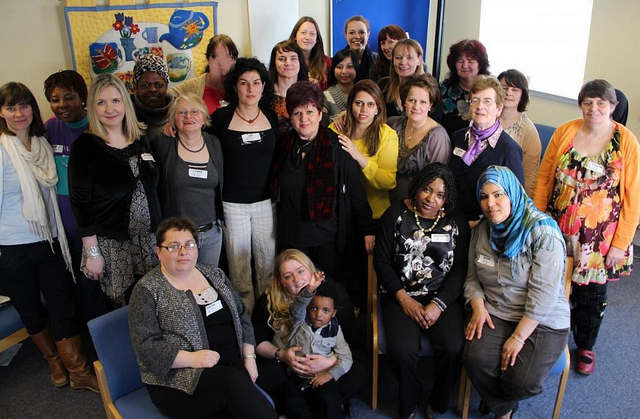

(Photo by NuageDeNuit)

Making it Home: we’ve (nearly) made it!

Tuesday, April 30th, 2013

An update on the Making It Home Project, which I blogged about a few days ago: YOU ARE ALL WONDERFUL PEOPLE.

On Sunday, we reached our funding target of £1,000, which means we can make our magical book a reality. Thank you so much to anyone who read about the project, shared the link, sent folk in our general direction or best of all, donated a tiny little bit or a whole great big lot to help us make our book a reality. YOU ALL ROCK.

However, we’re not done!

There is still time before the funding deadline passes. There is still time for you to give us some money.

But why? I hear you cry! You’ve already got what you need! And yep, you’re right. We have the money we need to create our book and print a few copies and distribute them about the place, hopefully for free. BUT! There are various ways that, with your help, we can make our magical book even more magical. They are as follows:

- Right now, we’re only able to budget a very small amount for graphic design, which means we’re having to call in favours from our pro graphic design friends. We’d love to be able to afford more, so a) the book can look fancier and b) we can pay the people involved a proper rate.

- More money means a larger print run, which means more folk can get their hands on free books. FREE BOOKS are what make the world go around, amirite?

- While the fundraising’s been going on, we’ve been busily collecting quotes from printers and other book-creation folks. If we raise more money, we’ll be able to go for the option that’s best for us and our book, rather than just the cheapest options.

- Fancy binding! Fancy papers! END PAPERS! Basically a much more fancy, pretty, lovely book for all of YOU to read!

Convinced? Click on the title in the widget below (or click here) to head to the donation page! Not convinced? Click it anyway — it’ll take you to a video that shows you some of the amazing work our two groups of women have been doing. You can also read more about what we hope to achieve with this project, and that might help you to make up your mind about donating. Can’t afford to donate? Please don’t worry. You should still click on the link, because there are other ways you can help. Below the video are a series of tabs that will allow you to tweet or Facebook details about the project, or share them via email. Spreading the word is just as important as giving money… really!

Here’s the link:

*

Budding writer? Creative person in need of a fun job? Check out the various resources and services at Bookworm Tutors. Alternatively, check out Edinburgh Vintage, our sister site. If you want to get in touch you can follow OneNightStanzas on Twitter, or email claire[at]onenightstanzas.com. I reply as swiftly as I can!
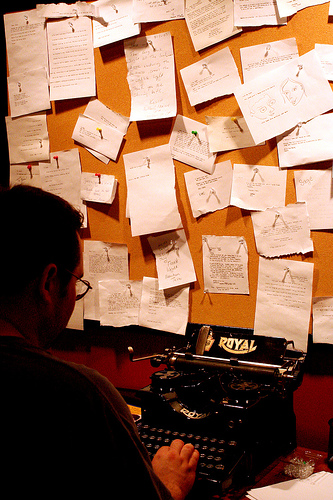
Got five minutes? Help me create a magic book! (Please.)

Monday, April 22nd, 2013

wswmih

Hey ONS-ers. I have a big, big favour to ask.

I don’t often ask you guys for stuff. I’ve never run ads here, and I even took down my tip-jar ’cause I felt bad about it. But now I’m asking for your help, because I know you’re all super-cool individuals who know a damn good cause when you see one.

I’ve spoken a bit before, here (scroll past the inevitable cake pictures!) about the totally life-changing (really!) work I’ve been doing over the past year with a thing called The Making It Home Project. I won’t say too much about it here, because I want you to go and read all the details at this link instead, but I will say: this is the sort of creative work that I deeply, passionately believe in. Forget fancy book launches, forget big anthologies, forget even the humble poetry slam. This is what poetry ought to be doing with itself: opening up amazing new creative possibilities to people who might otherwise never have read a poem in their lives.

I’m being mysterious, so go see what I’m talking about! But first, listen to the following, heartfelt plea…

You guys all know the power of books — you wouldn’t read this bookgeek blog otherwise. You know there’s something about a book: they’ve got a special sort of magic that no other object has. And a lot of you know how much more magical a book becomes if it contains something that you yourself wrote… right? Well, we want to make a really, really magical book. It’ll be a book we can give to the incredible women we’ve been working with, so they can also experience how awesome (literally) it feels to hold and read and share a book that has your words in it. It’ll also be a book we can give to all of you — for free! — to show you the amazing work these groups of women have been doing.

I’d like to ask you to do three small things.

One: watch our video.

RST Poetry Film taster from media co-op on Vimeo.

Two: click on the link in the image below, go and read more about what we’re doing, and how we plan to make our book.

Three: if you can (and only if you can), donate a pound or two to our cause. Any donation over £5 gets a reward… the more you give, the bigger and cooler your reward will be. If you can’t afford to donate, that is totally OK. But I’d be super grateful if you could spread the word around to anyone you think can help us.

These three things will take you what? Five minutes? If that. But your five minutes will make a massive difference and I promise, I will be very, very grateful to you!

Thanks guys. You rock.

*

You can also visit Read This Press for more poetry (and typewriter paraphernalia!). Alternatively, check out Edinburgh Vintage, our sister site. If you want to get in touch you can follow OneNightStanzas on Twitter, or email claire[at]onenightstanzas.com. I reply as swiftly as I can!
Dear Poetry Newbies: writing your submission cover letter

Monday, September 10th, 2012

An earlier version of this post appeared at One Night Stanzas in September 2008. Please note, Read This Magazine is no longer an active publication.

One of the most important components of any submission is the cover letter - whether you’re sending a quickly-rattled-off haiku to a low-fi magazine, submitting your best four works to a respected literary journal or posting off a hard-wrought manuscript to a potential publisher. A decent cover letter can make the difference between acceptance and rejection, and because it’s generally the first thing the editor, agent or contest judge sees, it can even make or break the chances of your poems being read at all. The cover letter is a blank canvas upon which you can paint a picture of yourself for your new editor, collaborator, agent or publisher — it’s your chance to show them a little of the personality behind the poems, to tell them you’re different from the million other wannabe poets whose emails they’ve received this week. In short, the cover letter is a powerful tool, and yet a huge number of poets fail to use it to its full potential — in fact, many people just don’t bother with cover letters at all.
Now, you may well be one of the lucky few who has realised the potential of the letter and got your method of composition down to a fine art. But if you’re not, you’re probably wondering exactly how you can make more of this useful writerly tool. Well, as always, ONS is here to help, with a few pointers to get you well on the way to writing the cover letter that could change your life! (Well… maybe.)

1: Be yourself.
This is the #1 rule when it comes to doing just about anything. Poetry is a personal thing — it comes from a sincere place, and so should the covering letter that accompanies it. So don’t show off and big yourself up in your letter if you’re actually a shy and retiring wallflower, for example — if your reader is worth their salt, they’ll be able to sense something fishy. If you’re submitting for the first time ever and you’re unsure about things, say so! Editors are all human beings too (as far as I know!) and chances are, they probably felt the same as you once upon a time. OK, so saying “I’m not sure if this is right or not!” might sound feckless — and some stony recipients may take the opportunity to roll their eyes at your expense — but it’s much better than trying to pretend you’re totally au fait with everything when you’re not.

2: Be polite.
This may seem like a total no-brainer, and it really ought to go without saying, but you’d be shocked by the number of downright rude cover letters that used to land in the Read This Magazine mailbox every month. Comments that could be perceived as rude range from the self-deprecating (”I expect you’ll probably decide that your magazine’s too good for my stuff”) to the plain offensive (”if you reject my poems then f**k you” — a line which, we found, crops up with alarming regularity).
A lot of these comments are probably intended to be tongue-in-cheek, but when all you have to go on is an email, it can be hard to read “f**k you” as anything other than offensive. Basically, there’s nothing more effective than rudeness to make an editor think ‘reject!’, and for this reason, it’s best to keep any wisecracks to a minimum.

3: Don’t criticise your recipient.
Basically, whilst you are by no means required to agree with every rule in a particular magazine’s submission guidelines, or to accept everything a particular publisher stands for, if you want to have your work accepted, it’s probably best to keep your misgivings to yourself. Saying “the way you do X is kind of lame” will not do you any favours. OK, so a good editor shouldn’t let it sway their decision, but it may well sour their mood… right when they’re about to read your poems! For example, when Read This started up, we got a submission from a guy whose cover letter included the line “by the way guys, your website looks kind of amateurish and the colours hurt to look at.” He was probably trying to be helpful, but it made us all a bit upset and annoyed — we’d just spent a load of time and money getting online. When it came to looking at the guy’s work, we were just unable to get warmed up to discussing it. Being impartial is tricky when your first impression of someone is that they’re potentially hostile to what you’re doing!

4: Avoid grandiose statements.
OK, this is my particular pet hate, and Read This used to get it all the time. It ties in with what I said in point one about being dishonest and showing off - there’s nothing worse than a cover letter that’s full of ego! Some perfect examples: “my work has featured in over 200 literary publications worldwide” (sorry, but my immediate response is ’so why haven’t I heard of you?’) and “I have around 700 poems to my name” (being prolific isn’t necessarily good, and certainly doesn’t make an editor more likely to publish you). Sound like any of your cover letters?
It’s easy to fall into the trap of bigging yourself up, because of course you want to make as good an impression as possible. But rather than the sweeping grandiose statements (which can make you look like an egomaniac, or even a bit of a fibber), try being more specific. If you’ve been published in a load of magazines, name three or four of the more ‘respected’ ones. If you don’t know which are the ‘respected’ ones, just name the most recent - that way, instead of thinking “so why haven’t I heard of you?” the editor is more likely to think “I know that magazine - this person must be good!” And rather than stating exactly how many poems you’ve ever written (700 may be a huge achievement for you, but to a stranger it’s just a number), again, try to be more specific. Let the editor know why you write such a lot. Say “I write as often as possible so I can keep growing as a poet,” or “I’ve written a lot of poems about cultural identity, because I feel strongly about it.” Both these statements will make the person at the other end of your submission letter/email much more interested in you, and they also avoid the arrogance factor.

5: Your poems are written with care - your cover letter should be, too!
So that means checking for spelling errors and typos, and writing in full words and sentences. Not all magazines expect you to do the hyper-formal, with-kind-regards-yours-sincerely stuff, but I’d say that 99.9% of magazine staff would be put off by “here r sum poems 4u guys.” It might turn out to be unmerited, but a badly-worded or lazily-spelled cover letter could lead to some doubt about your abilities as a poet!

6: Sign your name.
This is another no-brainer, but Read This constantly received submissions from John and Jane Does who provided NO clues about their identity! I mean, this isn’t a major issue, but it does make for rather awkward replying (”Dear anonymous poet”?). We also had submissions from people who have only supplied “screen names” (see my post on pen names), and even one person who, crazily, wrote a perfectly good cover letter but signed it “who wants to know?” WHAT?!
Basically, just give the editor something to go on. As the pen name article explains, you don’t have to use your real name - just provide something half-sensible that your recipient can use to refer to you… and always make sure you provide a working email address or correct mailing address for replies.

Ever received a cover letter, or proof-read one for a friend, that you think deserves a mention? Was it unbelievably impressive or heinously bad? Do you have any cover letter crimes that you want to own up to?

*

You can also visit Read This Press for more poetry (and typewriter paraphernalia!). Alternatively, check out Edinburgh Vintage, our sister site. If you want to get in touch you can follow OneNightStanzas on Twitter, or email claire[at]onenightstanzas.com. I reply as swiftly as I can!
(Photo credit)

Dear Poetry Newbies: a checklist for submitting work to magazines

Monday, May 21st, 2012

An earlier version of this post appeared at One Night Stanzas in August 2008.

Last week I wrote a post designed to help you start submitting your poetry to magazines. Avoid missing out a vital step in the process by reading over this checklist - print it out and stick it on the wall if necessary; that way, you’ll stay in the good books of every editor you submit to!

1: Choose your publication.
Read any info you can find about your chosen magazine, journal or anthology carefully. Consider: does your work belong there? Would you be happy for your name to appear in the publication?

2: Choose your poems.
Make sure you’re not sending too many (most places specify a limit which could be anything from 3 to 15) - and if you don’t know how many is too many, limit yourself to 4 or 5. Also to bear in mind - have your poems been sent off to or published in another place? If so, is the publication you now want to submit to OK with this? If you’re not sure, ask.

3: Read the submission guidelines…
…and read them carefully! Make sure your poems are presented and sent to the publication according to their rules. You should ALWAYS read the submission guidelines - and not only because editors love you for it - the guidelines often give you a wealth of information about the place you’re sending your stuff to as well.

4: Write your cover letter.
Your cover letter should always include your full name (or pen name), and a return email or mailing address… at the very least! It’s also a good idea to drop the name of the publication you’re submitting to. This sounds weird, but it’s not unheard of for editors to use submission email addresses for multiple projects. Also, naming the publication shows eds that you’re not just cold-calling every literary magazine you can find.

5: Check for typos and spelling errors.
Better still, get someone else to cast an eye over your submission. I’m really bad at spotting typos - after a while you can just stop seeing them. Make sure you check your cover letter, too!

6: Send your submission with care.
Make sure the editor will be able to contact you if they need to (this is particularly important for those of you submitting by post). Remember, it is YOUR responsibility to provide a SAE if you want your poems back - it is NOT the job of the magazine staff to buy sufficient postage for you (even if you do send them the money - go and get the stamps yourself, lazy)! With email submissions, make sure your return address is fully functioning, and be sure to add the publication’s email to your safe list or address book to prevent any replies from disappearing into your Spam folder.

7: Be patient.
After you’ve sent your work, there’s little you can do - just cross your fingers and wait. Bear in mind, you may need to wait up to 3 or 4 months. While some people like to send nagging emails to try and find out what’s going on with their work, I’d strongly advise against this. Generally, if you haven’t heard anything after 3 months, you can send your work elsewhere - and if a magazine wants to publish you after that point, just be sure to let them know if you’ve since sent elsewhere any of the pieces they want.

8: Deal with the fallout.
Rejected? Feel miserable for a bit, have a cup of tea, then chalk it up to experience, and try again. DO NOT EVER EVER email the editor back in response to a rejection. EVER.

9: Alternate your poems.
So, you’ve painstakingly sent a bunch of poems to a magazine, having chosen carefully, and read all the guidelines… hopefully you’ll get a positive response! Now you just need to give those poems a rest for a while - if you’re submitting to other magazines, try to avoid submitting the same poems simultaneously until you know the outcome.

10: Take the critique on board.
Very few editors take the time to write even a couple of lines about your work when they send their response. However, on occasion you will get a bit of feedback, usually in the form of suggestions for possible improvement if your work is rejected. If an editor suggests that perhaps your linebreaks aren’t so hot, for example, don’t be angry or offended - chances are they’re only commenting because they can see you have potential. Put their advice into practice and it could mean the difference between rejection and success next time!

Good luck!

*

You can also visit Read This Press for more poetry (and typewriter paraphernalia!). Alternatively, check out Edinburgh Vintage, our sister site. If you want to get in touch you can follow OneNightStanzas on Twitter, or email claire[at]onenightstanzas.com. I reply as swiftly as I can!
(Photo credit)

Dear Poetry Newbies: pen names - yes or no?

Monday, May 7th, 2012

An earlier version of this post appeared at One Night Stanzas in August 2008.

OK guys, for many of you, this may seem like a trivial matter. I know there are many writers out there who wouldn’t dream of adopting a pen name, and who think it’s just for historial novelists and fanfic writers. However, there are a lot of legitimate reasons why poets and other writers might want to adopt an alternative moniker — and it happens more than you think. I originally wrote this post because I saw so many unfortunate and off-putting pen names in my work editing Read This Magazine. Clearly working out a good pen name is quite difficult, and sticking with it, even more so. This post is designed to help writers who might want to take the pen name plunge to see it from an editor’s point of view. Hopefully it’s helpful.

*

Firstly, you need to decide whether you really want a pen name, or whether actually, you’d be better off using your real name. Chances are you can easily prove your birth name and identity, and you probably already have a bank account and whatnot set up in that name - useful, if your work ends up in a magazine that wants to pay you (I promise, sometimes it does happen)! However, pen names are handy things for those of you who have the same name as already-famous people, for example; donning a pseudonym can clear up any confusion and prevent those annoying “oh, are you any relation to…?” comments.

Think about why you want a pen name in the first place.
Is it because you just don’t like your name? Is it because your real name is, say, Michael Jackson, and you want to avoid confusion, and/or irritating comments? If so, you could always keep your real name, but just doctor it slightly. Maybe publish your work using initials instead of your first name? Many of the greatest poets have done this, after all - WH Auden, e.e. cummings and WB Yeats, to name just a few. Or, if you don’t like your last name (I can relate to this!), you could publish using your maiden name, your partner’s name, your mother’s maiden name, etc. This means that your pen name does not force you to assume a whole new identity… it just allows you to tweak your own a little.

A cool name doesn’t guarantee publication
If your reason for creating a pen name is because your real name seems boring, or because you don’t think it sounds “literary” enough, remember this: you don’t necessarily have to have a cool writerly name like Dashiell Hammett or Fyodor Dostoyevsky to get your work out there. In fact, I think you’d struggle to find an editor who’d take “cool name!”, over “great poems!” In fact, sometimes, it’s better to embrace who you are than to worry about projecting an image. If your poetry is good, your name shouldn’t matter.

Make sure your pseudonym is not stolen.
I remember when my sister and I were teenagers, we both wanted to use the pseudonym Elizabeth Gill (our paternal great-grandmother’s maiden name). It was her idea first, but I latched onto it, and obviously the whole situation resulted in much scrapping and sulking. Similarly, if you want to use the actual name of someone you know, you might want to ask them first. It might be that they already have something published or copyrighted under their name… and even if they don’t, you still ought to warn them, or they might get a big shock if they ever Google themselves.

For goodness’ sakes make your pen name sound realistic.
You might think it’s cool to combine your love for your cat and your favourite football team in order to make the ultimate pen name… but a pseudonym like Snuffles Hibernian - while personal to you - doesn’t exactly give you a heap of street-cred. There’s nothing wrong with a quirky name, but think about it this way: you might just be sending the odd poem out here and there now, but what about in five years’ time? What about in twenty years’ time? If you’re forty and you end up with a massive book deal, would you be OK with putting your chosen pen name on thousands of covers?

Please, please don’t use the name of an already-famous writer, literary character, or mythological figure.
This might sound like a no-brainer, but trust me - at Read This we saw this all the time. Morgan le Fay is particularly popular… we’d sometimes get two or three submissions in a month from people with that pseudonym! We also had someone who gave their real name but asked for their poems to be attributed to Oscar Wilde (they got a polite but firm “um, no!”), and there are many, many people who name themselves after characters from books, film and TV (Sally Stitches and Hamlet Shakespeare are particularly memorable ones I’ve seen).
OK guys - please don’t do this! It’s just like stealing someone else’s pen name idea, or using someone else’s name without permission - only it’s worse, because it’s also hideously cheesy. Some editors may be OK with it if you sign your submission email “Geoffrey Chaucer,” or “Sir Lancelot”, but most won’t. Chances are, originality is pretty high on their wishlist. Don’t have them raising an eyebrow before they even read your cover letter.

Try to make your pen name exactly that… a name.
This is a tricky one, because there are writers out there who gig and publish successfully under a non-standard moniker (take Bitch, for example, or Harlequinade). However, generally it’s a good idea to have a pen name that’s recogniseable as a name. Again, we Read This editors witnessed poems written under all sorts of guises — many that read like chat-board screennames, “Becca666” or the like. It was also a pain in the ass to get submissions from writers whose names we were unable to pronounce thanks to their use of weird characters — so in case you were thinking about it, steer clear of “$@R@H”, etc. And finally, although they can work, you should be wary of things like “Justpoemz” (we once had a poetry submission from one “ItzJustDrama!”). The name you write under will, whether you like it or not, project an image to editors and other writers. You need to decide what you want that image to be, and act accordingly!

Finally, if you’ve picked a name but you’re still not sure if it’s OK, try setting aside a few days or a week, and adopt your name for the whole of that time. Introduce your pen-name-self to your family and get them to call you by your chosen name (seriously — if you want your writer friends to do this, you also need to be OK with your mum knowing about it). Send off letters and postcards to friends and sign them from your pseudonym. Ask people you know what they think, and get their honest opinion. After a bit of trying and testing, if you’re not embarrassed by or sick of your new name, chances are it’s OK.

Thinking of taking on a pen name? Why - and what ideas do you have? Or do you already have a pen name? If so, how did you come to choose it? Why did you want to use a pseudonym?

*

You can also visit Read This Press for more poetry (and typewriter paraphernalia!). Alternatively, check out Edinburgh Vintage, our sister site. If you want to get in touch you can follow OneNightStanzas on Twitter, or email claire[at]onenightstanzas.com. I reply as swiftly as I can!

(Photo credit)

Do you want feedback on your writing?

Friday, November 11th, 2011

So yet again, I missed my own bloggiversary. One Night Stanzas turned a truly astonishing three years old in August this year — I really can’t believe I’ve had the staying power to keep it going all this time. Although posts have got scarcer as my work, writing and studies have got more demanding, I still receive emails all the time from writers of all walks of life. They all want, in some form, the same thing from me: help with, and feedback on, their writing.

Until now, I’ve generally only had the time to scribble a few lines of general encouragement back at most of these people, but as time has gone on I’ve come to feel more and more guilty about doing that.

Therefore, I have decided to start up a proper service for reading, editing and critiquing creative writing. Interested? Read on!

Poets: I can offer you help with everything from line-by-line workshop-style feedback on a single poem to an all-out manuscript service, and anything that falls between the two. If you need to put together a portfolio to apply to a creative writing course, if you want to get a book together, or if you just have some poems you fancy some responses to, drop me a line. I’ll give line-by-line notes, a written overview and concentrate on any particular elements you’d most like to work on.
You can email me at [email protected] or [email protected]. Feel free to send an initial tentative email with questions and whatnot first if you like.
You can find out more about the poetry service right here.

Prose writers: I can help you with the arduous task of proofreading — as an eagle-eyed college lecturer, this is a big part of my day job, and as my students would doubtless tell you I am pretty darned thorough! I can also offer a wider reading of your work and offer line-by-line feedback and a written overview. I can also help you seek out additional resources to help you progress with your project. I am happy to look at everything from flash fiction to novels, essays to academic theses.
Again, drop me a line to [email protected] or [email protected] and feel free to prod me with questions, random thoughts, whatever!
You can find out more about the prose service here.

Who the heck does this woman think she is?! I hear (some of) you cry… if you want to check out my credentials then please do have a read of this, or you can click ‘About’ here at ONS.

Want a custom service that doesn’t really fit what’s written here? Want to meet in person and chat (I’m in Edinburgh)? Please do drop me a line and let me know your thoughts.

I’d love to hear from you!

(Photo by truck stop tea party)

ONS appeal: HELP SAVE THE FOREST CAFE!

Tuesday, November 2nd, 2010

(Photo by Tim Macfarlane)

If you’ve been reading this blog for any length of time, it’s pretty much a given that you’ll know what The Forest Cafe is… you will at the very least have heard me mention it/wax lyrical about it/praise it to the skies. Forest is an Edinburgh institution and a place that carries a great deal of meaning for myself and many other Edinvarians. And unfortunately, it is now under threat. Please, please read the following and help us to save this very deserving Edinburgh landmark.

What is Forest?
Forest is a unique access-all-areas arts initiative which works to provide space, resources, funding and encouragement for artists and creatives of all walks of life in the Edinburgh area and beyond. It “aims to advance access to art and cultural activities amongst the general public of Edinburgh and the wider community“, basically. The Forest Cafe is the base of operations for this initiative: housed in a former church and inhabiting a maze of rooms over several floors, it offers a variety of vibrant, unusual and versatile arts spaces to anyone who wants to use them. At the heart of things is the veggie and vegan kitchen, which not only helps to fund Forest’s other activities, but also supplies hungry visitors with the best vegan burritos and chocolate brownie this side of anywhere. The cafe is also Forest’s performance hub — if you want to watch, play or organise a poetry reading, an acoustic gig, a play, a film night, a gramophone evening, a reading group, a recital or any other creative endeavour, this is your place. Events are free to stage, free to perform at and free to attend. They’re pretty much always brilliant, too.

But Forest isn’t just a cool cafe that also holds events. Alongside the cafe space is Total Kunst, Forest’s very own art gallery, which hosts traditional, experimental and installation artists from all over the globe. Anyone can exhibit and it’s always free. Also always free is Forest’s downstairs space, which provides facilities such as a dark room for budding photographers and a rehearsal space for bands and musicians. For a small fee — or sometimes for free, depending on your event — you can also hire out the cavernous Forest Hall, which will accomodate anything from a small group of amateur filmmakers to a full-scale ceilidh band and a hundred guests. Forest also has its own shop, selling a variety of crafts; its own successful publishing imprint, Forest Publications, which I really cannot praise highly enough; it even has its own hairdressing salon. And I haven’t even got started on their monthly free shop, library facilities or free fringe antics

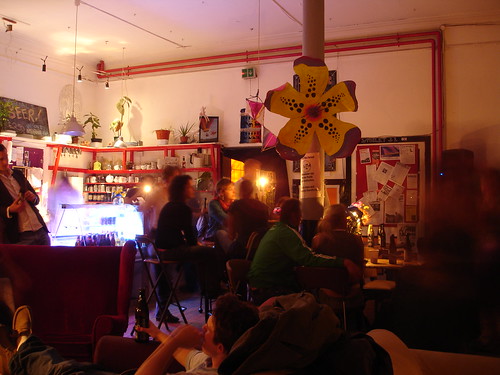
Forest 'o' Flash
(Photo by digiphotoneil)

How you can help.
Now, Forest is in danger of being evicted from its current home because the building has been put up for sale. Forest are currently tenants, and have been for many years — and although it’s very ambitious, they want to try and secure their future by raising enough money to buy the building outright. The current target is a massive £500,000, so they really need YOU to give as much as you can. The main way in which you can do this is by clicking here and donating via their simple Paypal form. For other ways to donate, or to get involved in other fundraising activities, just get in touch with them — they’d love to hear from you.

Why you should help.
Given all of the above, I don’t think I really need to tell you why you should donate to Forest. If you’ve ever been there, you already know what a special, unique place it is and what excellent work they do every day within and beyond the arts community in Edinburgh. If you’re local and you’ve never been there, now is the time to start — Forest desperately needs your support, and your life will be better for it. Even if you’re not an Edinvarian — hey, even if you’re not a Scot — you should still consider giving up a few of your hard-earned pennies for this very good cause. Like Shakespeare and Co and The Beat Museum, this is an arts initiative whose work resonates far beyond its small home city. If you donate to the Forest you’re helping hundreds of artists and creatives, and you’re making a stand for independent arts organisations the world over. Please think about giving as much as you can spare, even if that’s only a couple of quid.

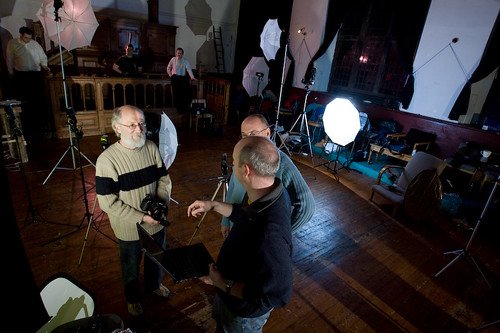
P1150846
(Photo by acb)

Let me tell you why I donated to ForestWhen I first came to Edinburgh, I didn’t know anyone. I was vaguely aware that a few people I went to high school with also lived in the city; that was about it. I was living in Uni halls with chilly rooms, unreliable internet access, and I was broke. Forest provided me with huge pots of tea for next to nothing, a quiet and comfy place to sit for as long as I liked, and totally free access to the internet. Later, when I got more acclimatised, I started getting interested in the Edinburgh literary community. Forest — and the fabulous Ryan Van Winkle, one of its most famous staff members — provided heaps of support for my writing, via their brilliant writing groups, workshops and events. One of the first Edinburgh readings I ever did was The Forest Golden Hour, and the crowd was huge, warm and wonderfully supportive. Later still, I decided I wanted to start my own literary magazine, and yet again Forest was there to help me. For two full years Forest gave us the space and resources we needed to print, hand-bind and distribute our own zine — all totally free. We ran Read This events in the Forest Cafe, we used their fabulous website, noticeboards and Facebook group to promote ourselves and call for submissions. As things progressed, Forest also supported Read This Press (in particular, Chris Lindores’ collection You Old Soak) by providing printing facilities and carrying our titles in the shop, cafe and online. Forest Publications have published and promoted my work and the work of my various projects on numerous occasions. I genuinely believe that without Forest I wouldn’t be the writer I am today. And I’m just one young artist of the thousands who make use of Forest’s services and resources every year.

I implore you to help keep this incredible project afloat. Please go here, and donate now. As much as you can — it will make a difference.

Thank you!