Posts Tagged ‘authors’

Procrastination Station #142

Friday, March 27th, 2015
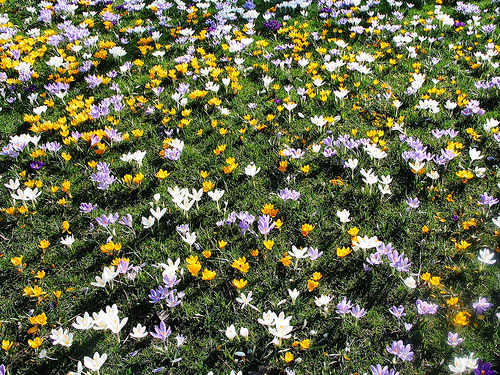
York March 15 (13)

Certainly the PBS still loves it some authoritative dude poetry. I helped out with a criticism workshop the other day and we were discussing a review of Harsent by Michael Hulse, which started out by listing Harsent’s achievements and using words like ‘magisterial’, ‘masterful’, ‘universal’. One of the other folks said she didn’t feel like there was room for the reader to make their own decisions… That’s kind of what I mean when I talk about the ‘aggrandising’ stuff; when the poet’s so big there’s no room for the reader. Why bother having readers when you’ve already decided how you are going to be read? It’s dull and usually comes bearing nostalgia for the time of Great Men. Which is fine if you’re in a position to be a Great Man.

Dave Coates, aka the most sensible poetry reviewer around, was interviewed by Hinterland and he spoke SO MUCH TRUTH. (If you read nothing else from this post, read this. Really.)

The new Scottish Book Trust public participation campaign is now open! The theme is “Journeys” — send SBT your journey-related story and it could end up in a book!

Check out these cheeky book “recommendations” from mischevious Waterstones staff!

I’ve always wanted to belong to the city of ideas, and it seems to me that membership of such a city is often incompatible with the other kinds of membership on offer along the way. Choices, or compromises, have to be made, and I find myself more and more inclined to say no to some invitations as a way of saying yes to to something closer to that ideal. I found it liberating to refuse both the Poet Laureate’s invitation to write a poem for the Queen’s Jubilee in 2012, and the Poetry Book Society’s attempt to include me in its Next Generation promotion of emerging poets this year. It’s not that I don’t want to be read, or that I object on principal to the business of actively seeking a readership. The question is one of context—do I feel happy in those groupings, in those lights? Do I want to be marketed as “young” and “new” and “sanctioned by”? Am I prepared to curtsey to the Queen, figuratively or otherwise? Do these things, these appointments, sit well with the actual poems I’m writing?

FRANCES LEVISTON IS UTTERLY GREAT.

I both do and do not agree with Ms Trollope here. Discuss.

Related: In case you’re feeling depressed about the fact that one of the Scottish Children’s Book Awards was just won by a 21 year old (a deserving one — well done Alex McCall!) here’s a list of twelve authors who weren’t published til later in life.

People who complain that creative writing courses produce relatively few writers don’t complain that history degrees produce few historians, that music schools produce relatively few world renowned soloists, that art departments don’t necessarily produce a lot of major artists. I spent 16 years in schools teaching art. Are people asking how many of those are ‘great’ artists now? I sincerely can’t see why writing is different from any other art.

So that guy wrote that article about Creative Writing MFAs, which I [largely] totally and utterly agreed with… but I agreed even more with George Szirtes’ response. (I’m contrary like that.)

I have seen so many lovely, touching tributes to Terry Pratchett online over the last few days… but among my favourites were xkcd’s cartoon and Chris Riddell’s wonderful drawing.

OMFG, Kindle Cover Disasters is… amazing.

Of writing itself, Rilke wrote: “Depict your sorrows and desires, your passing thoughts and beliefs in some kind of beauty—depict all that with heartfelt, quiet, humble sincerity; and use to express yourself the things that surround you, the images of your dreams and the objects of your memory. If your daily life seems poor, do not blame it; blame yourself, tell yourself that you are not poet enough to call forth its riches; for to the creator there is no poverty and no poor or unimportant place.” All writers know this problem. A poor workman blames his tools, and we have only two: language and experience.

This essay on Rilke and ‘writing from the middle of things’ is pretty excellent.

Have you read Barthes’ Death of the Author? Here’s a pretty cool discussion on it.

Calisthenics for writers is pretty hilarious…

Your Chicken Leg Hut Performance Art will explore the idea that women can never win when it comes to their appearance; in a culture of pervasive misogyny, there will always be something “wrong” with how a woman looks. It will also ask its viewers to examine their own internal biases with regards to the objectification of women. Divorced of their context, are the chicken legs simply things? Or are they body parts deserving of love and respect? Remember that there are no right answers to these questions.
Plus you will be running around like the fucking boss of the forest in your hut on legs.

Feminist advice from Baba Yaga is pretty excellent.

You really ought to read these extracts from Citizen: An American Lyric, by Claudia Rankine, which just won a National Book Critics Circle Award.

Do you say “in a weird way”? Do you know why you say it?

It’s critical to understand that this isn’t censorship, but rather that these are amendments not permanently made to an already-published text. But the question is raised: What damage could be done to a writer’s intended vision in the name of this cleanliness?

Someone’s invented an app that will take all the swears out of any book. EYEROLL.

You might have seen this Forty Portraits in Forty Years post floating around… it is wonderful, touching, inspiring.

I LOVE Jessamyn (thanks to Lucy for introducing me to her) and I love this easy morning yoga routine she’s put together for Buzzfeed.

What is a writer’s freedom?
To me it is [hir] right to maintain and publish to the world a deep, intense, private view of the situation in which [zie] finds [hir] society. If [zie] is to work as well as [zie] can, [zie] must take, and be granted, freedom from the public conformity of political interpretation, morals and tastes.

[pronouns changed by me because they were all needlessly male]
^This is Nadine Gordimer on what freedom to write really means. Pretty good, pronouns aside.

I want to be ALL of these people when I grow up. …and related, here are some more excellent women.

Celebrities standing up to fat-shaming. As it should be!


The lovely Jane Alexander is launching her first novel… check it out!


Author Cesca Major created a writing webseries which is now done — this is video one and you can see all the rest here.


And the brilliant Sasha just introduced me to Australian feminist songstress Courtney Barnett and I. love. her.

Have a great weekend!

*

Like shiny things? Check out Edinburgh Vintage, a totally unrelated ’sister site’ full of jewels, treasures and trinkets. If you want to get in touch you can follow OneNightStanzas on Twitter, or email claire[at]onenightstanzas.com. I reply as swiftly as I can!
Procrastination Station #141

Friday, March 6th, 2015

Page by Page
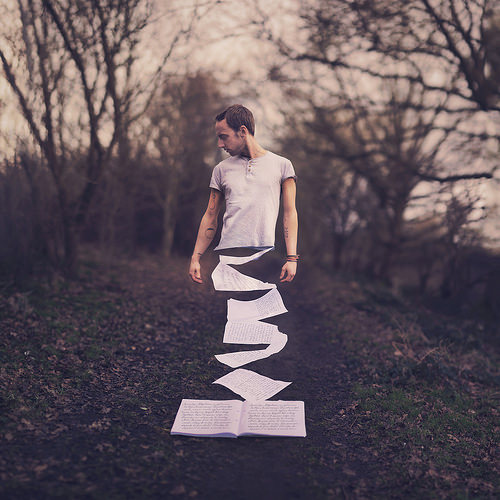
(Photo credit)

I question it all. If no one is going to read it, why did I put so much energy into that book? Why did I agonize over the phrasing that takes place on page nine or the metaphor on page ninety-nine? Why did I choose that topic or story and why did I think it would resonate? I even begin to question my passion. What am I doing this for? Why do I spend so much time contributing my thoughts and words for so little monetary return? Am I any good at this?

What Happens When (Virtually) No One Buys Your Book?

Things You’ll Never Hear An English Literature Student Say < — this post contains truth.

Here’s a great poem by Kwame Dawes.

Some of the best science fiction out there has been penned by women.

True fact: here are some examples (though Woman On The Edge Of Time should totes have been on this list).

Scottish Book Trust’s latest Book Talk podcast is a YA special!

A slightly more unusual ‘bookstores you must visit!’ list than the million other usual ones. (I’ve been to two of the eight!)

Parallel Universes run parallel to each other with slight alterations that change fate in time. Whoa. Multiverse is when there are many parallel universes. Usually this has something to do with black holes and time travel. More than likely, Spock is traveling through all of them. When you toss metafiction in here, it’s a little odd to compare it, but kind of important. Metafiction is when a story becomes aware of itself. It’s kind of like parallel universes colliding. Authors often join in on their own stories- literally.

Confused by sci fi? BookRiot can help.

English PEN are recruiting!

Jonathan Franzen continues to be a total prick. In other news, water is wet.

Eric Ries, a lecturer on entrepreneurship and innovation, went on a “pre-book” book tour to drum up interest before his work, “The Lean Startup”, even had a firm name, and started selling it online more than a year in advance of its publication. It worked. The book’s cover is now able to boast “the New York Times bestseller” above the title.

Want to be an author? You also need to be an entrepreneur.

I am currently reading Kathleen JonesThe Whistling Poet, a brilliant biography of Norman Nicholson, who I love. Here’s a great recording of him reading one of his poems, ‘Wall,’ at the Poetry Archive.

How many Edinburgh bookstores have you been to? (I have, of course, visited all of these.)

…and speaking of bookstores, here’s a (hilarious) little insight into the lives of booksellers.

From 2nd to 15th March, the imprint will be open to accept fifty pages, an outline and an author biography from previously unpublished writers of fiction. Short stories will be considered, in addition to novels.

Tinder Press wants your submissions! (Thanks, Heather!)

Here’s a VERY useful and interesting list of open submission calls. You’re welcome.

Also… do you write erasure poems, or want to? Are you not a cishet white dude? This is a submissions call just for you and it looks GREAT.

Have a great weekend!

*

Like shiny things? Check out Edinburgh Vintage, a totally unrelated ’sister site’ full of jewels, treasures and trinkets. If you want to get in touch you can follow OneNightStanzas on Twitter, or email claire[at]onenightstanzas.com. I reply as swiftly as I can!

Procrastination Station #133

Friday, October 10th, 2014

For the average book, you figure $7 will go to overhead, and that leaves the last $1.50 as profit. For the average book, the expected contribution to overhead could be $50,000 to $150,000. That’s why most editors have a minimum number of copies they have to aim for with any book. (At some imprints, that’s 10,000 copies. At others, it’s 25,000 or even 50,000.) Random House can’t sign up a thousand $3,500-advance novels because each of those books has to carry the weight of all that overhead.

An excellent answer to the question, “why did Random House pay $3.5m for Lena Dunham’s stupid memoir instead of paying 1,000 novelists £3,500 each?”

Cool signs outside independent bookstores.

Struggling to find time to read? Read this.

Chris Abani once said in a workshop that readers will always wonder if your characters are you–even if your main character is a Chihuahua. There’s not much to do about this wondering except write the characters you want to write with complexity and empathy.

Your characters are all you. Here’s how to make it less obvious.

Reading makes you happier: fact.

What’s the difference between riches, wealth and success? Might be interesting to penniless writers!

Part of the reason it took Fitzgerald so long to finish Tender is the Night was Zelda’s worsening condition. But you’d think that his haphazard, alcohol-fueled creative process wasn’t doing him any favors, either.
Yet recent research has shown that messy, dark, noisy, booze-filled environments like the one Fitzgerald cultivated at La Paix can, in fact, help stimulate creativity.

Good news, writers! Writing in the pub is a good idea!

I really like Kanye West (or aspects of him… please read this before coming to kill me), so I really liked this.

I’m a sucker for literary tattoos.

You should probably spend a lot of your twenties doing art from the time you wake up to the time you go to sleep, and turning down a lot of unnecessary commitments in service of that. First, because that’s what you need to do to be good enough so that when you have inspiration, your inspiration will lead to something; and second, because it’s almost fucking impossible to make a living drawing pictures, writing words, or playing music. Just the fact that we think we can do these things for a living is an intense act of hope and arrogance. If you want to be able to do that, if you decide to stake your claim on that path, then oh, my God you have to do such hard work! If you’re the sort of person who fucking whines about being motivated, like some of the art students I lecture, then just fucking stop. I’m not interested in speaking to anyone who wonders how to motivate themselves. If you need to talk about how to get motivated, then go get a normal job in the normal scheme of the world and just do art as a hobby so you still love it. Stop clogging up the field for the people who need this like a drug.

Molly Crabapple is great.

Here are 16 photos of Margaret Atwood looking like a badass and saying super smart things. You’re welcome.

My reading speed is 236 words per minute! Find out yours.

I don’t think writing the truth makes you strong by default. I think it makes you vulnerable, which in turn can make you strong. It’s a naked feeling, both writing about yourself and writing about those you once loved, still love, and some you never loved at all. And though we may highly value the opinions of our loved ones, that doesn’t always mean we must ask their permission to write our stories in full.

If, like me, you steal details from real people’s lives for your writing, you should read this.

Hey, authors? Don’t be this desperate.

I genuinely enjoyed this: 50 Facts about Sex and the City you probably didn’t know.

Today, in politically correct 21st-century Britain, you might think things would have changed but somehow the Great White Male has thrived and continues to colonise the high-status, high-earning, high-power roles (93 per cent of executive directors in the UK are white men; 77 per cent of parliament is male). The Great White Male’s combination of good education, manners, charm, confidence and sexual attractiveness (or “money”, as I like to call it) means he has a strong grip on the keys to power.

Grayson Perry is a bloody legend.


Why we need poetry. (More literary TED talks here!)


HOLY SHIT Danny MacAskill!!!

Have a great weekend!

*

Like shiny things? Check out Edinburgh Vintage, a totally unrelated ’sister site’ full of jewels, treasures and trinkets. If you want to get in touch you can follow OneNightStanzas on Twitter, or email claire[at]onenightstanzas.com. I reply as swiftly as I can!

(Photo credit)

Dear poetry newbies: dealing with negative criticism

Monday, November 4th, 2013

A version of this post first appeared at One Night Stanzas in October 2008.

How do I tell the constructive from the negative?
This is tricky - particularly if you’re new to receiving criticism or if you feel particularly proud of the piece of writing being criticised. If either of these things apply, then you’re very likely to see any criticism as an attack. And don’t get me wrong: even constructive criticism can feel that way sometimes, but look out for the positives. There’s a definite difference between “cut out stanza four, it’s no good at all” and “if you cut stanza four, the poem would be better”. The suggestion is the same, but the delivery is crucial. The first statement is concentrating on what’s wrong with your poem, while the second is a suggestion for making it better.

Another way to work out whether something is constructive or negative is to look at how universal the critical statement sounds. Offering a personal opinion is usually fine; making sweeping generalisations isn’t. For example, if someone says “this doesn’t really read like poetry to me”, they’re just offering their opinion. If they say “what you write isn’t poetry”, they’re assuming that all your readers will agree. There’s a big difference between “this isn’t to my taste” and “no one will like this.”

Some negative criticism can be deliberately well-hidden, too. Statements like “I’m sure there’s a good poem in there somewhere” or “I think I understand” are very ambiguous. If it’s ambiguous, it’s not really helpful either way, so give your critic the benefit of the doubt and ask them to be more specific. You should soon be able to tell whether or not this is criticism you should be taking on board.

Someone just made a really mean remark to my face. What should I do?
First of all, step back and try to be as objective as possible. Don’t just tell them to get lost, and don’t allow yourself to say the first thing that comes into your head - you’ll doubtless regret it later. Instead, think quickly but carefully about how you want to react. If the criticism needs an immediate response, buy yourself time by saying “I’m not sure what you mean,” “can you elaborate?”, or even “sorry, I didn’t quite catch that.” (This can be a good tactic, because while it’s easy to say something hurtful once, having to say it again can make people think.) As your critic rephrases their remark, you may come to realise that they didn’t intend to be hurtful in the first place, and you could well be glad that you didn’t just snark them off! However, if you’re still hurt by their comments, come back with a neutral response like, “that’s an interesting angle on it, I’ll think about that”, or “well, I appreciate any feedback.” That way, you can bring the issue to a close and escape from the conversation… or at least change the subject!

Someone’s left a negative comment on a forum/my blog/a poem I posted online. What do I do?
If someone else has written ill of you, that doesn’t mean you should do the same - so don’t take to a blog or forum-post and vent spleen yourself. Instead, try to get the comments in question removed. If this means communicating with the original poster, don’t get personal - just make the request as reasonably as you can. If it means speaking with someone higher up the foodchain, don’t be too long-winded or dramatic… just point them in the direction of the trouble, and explain briefly why you think they need to intervene.

If the negative comments are on a smaller scale - say, if a mean commenter has wandered into your deviantART gallery and decided to leave a few choice words - the best thing you can possibly do is just ignore it. This can be really hard, but an angry response of any kind means that your negative commenter has won. If you’re itching to write something scathing back, snap your laptop shut or turn off your monitor and remove yourself from the situation. Go away and do have a cup of tea, or have a rant about it to someone. Don’t go back to your computer until you’re cool, calm and collected; until you know that you won’t even be tempted to dignify your attackers with an answer. (NB: this is hard. I have not always succeeded in staying nice. However, I’ve always regretted it when I’ve given in to snark!)

My work got a really negative review, and heaps of people have read it. What do I do?
This can feel like a huge deal at the time, but it really isn’t. If you’re a writer, bad reviews are part of the job-description, and trust me, they really don’t hurt your career as much as people might like you to think. Any review is just the opinion of one person, and them saying “this person’s writing sucks, nobody should read it,” is kind of like saying “rum-raisin ice cream sucks, nobody should eat it.” Sure, rum-raisin ice cream might be an acquired taste, but are people really going to stop eating it because one guy told them to? Nope. Are people really going to totally boycott your site, book or pamphlet just because one guy told them to? Nope. People have brains in their heads, and they want to make up their own minds, so the best thing to do about a bad review is ignore it and move on, ASAP. Think about it this way: this person who hates your writing has just told a whole load of other people that you exist. They might not have known that before. Your reviewer (if they’re even half-decent at their job) may also have sparked the curiosity of a few people. Chances are, even a bad review will get you more readers than no review at all. It really is true what they say: all publicity is good publicity, so really, you should be raising a glass in honour of your evil reviewer!

Argh! I snapped back at someone because they were negative about me, and how it’s got out of hand!
OK, so someone was mean about you so you were mean back, and then all their friends started being mean about you too, and they’ve all written heaps of bad stuff about you and you’re totally out of your depth. Or maybe you responded angrily to a negative commenter and now they’re really upset and threatening to get back at you somehow, and you’re worried about what they’ll say/do. Or maybe you’ve said something you now regret to someone important, and you’re terrified about the consequences it could have. I understand - never fear, it happens all the time, and these things are usually pretty easily solved.

Situation 1: they were mean, then you were mean back, now everyone’s being mean. No one’s in the clear here, but someone needs to take responsibility, and that someone might as well be you. Get in touch with the original negative commenter, and apologise (sincerely - no double-edged comments). Say you’re sorry, you didn’t mean for things to get out of hand, and you want to move on. If they’re even a half-decent person, they’ll accept your apology, and hopefully get rid of any nasty stuff they’ve written about you. If they don’t accept your apology, I’m afraid you’re just going to have to walk away, and console yourself with the fact that you were able to behave like an adult in the end. It may be worrying to think that there is snark about you all over the internet, but trust me, as long as you haven’t done anything actually criminal, it’ll probably never make a difference to your future.

Situation 2: you were mean, and now they’re threatening vengance. OK, realistically, what is this person going to do? Even if they’re threatening to harm your career prospects as a writer, those threats are probably pretty empty (I once had a reasonably well-known poet insinuate that no editor would ever acknowledge me if she had anything to do with it. So far, no evidence of this…), because trying to wreck other people’s chances doesn’t do your own chances any good at all. The best thing to do in this situation is to take back what you said, however hard that may be for you. Remove the comment you made, and apologise. If that doesn’t work, you’ll just have to take your chances. Again, I reckon I can guarantee that nothing drastic will come of it.

Situation 3: you said something you now regret to the wrong person. Easy: get in touch with them, apologise, and explain. If you don’t have a way of contacting them, find out. And if you can’t find out, move on. Yes, unfortunately people do have long memories, but sometimes you just have to chalk these things up to experience. The only thing you can really do is hope that your two paths cross again in the future, and you can make a better impression second time around.

Some stuff to remember:
- Not everything that sounds negative is negative. Read or listen carefully before you respond. Bear in mind that the internet comes without body-language, which makes up about 90% of all communication. Comments that sound rude could just be sarcastic or tongue-in-cheek. If you’re not sure, ask the commenter to elaborate.

- People are entitled to hold an opinion about your work, and they are allowed to say what they think. If you have a problem with this, then maybe you’re not ready to put your work out there to be read. Think carefully about whether or not you want other people to criticise your work - if you’re not confident, don’t feel rushed into submitting to magazines or posting your work online.

- If you think you’re constantly getting negative feedback, then maybe you need to adjust your negativity radar. It may well be that you’re not great at taking criticism, and so everything feels like a personal attack. If this is the case, you have to force yourself to be more positive. 90% of feedback is useful, so try and see the usefulness wherever you can. See all reviews of your work as publicity, and bear in mind that for every person who doesn’t really dig your work, there’s bound to be another person out there who’d like it.

*

Like shiny things? Check out Edinburgh Vintage, a totally unrelated ’sister site’ full of jewels, treasures and trinkets. If you want to get in touch you can follow OneNightStanzas on Twitter, or email claire[at]onenightstanzas.com. I reply as swiftly as I can!

(Photo credit)

Procrastination Station #120

Friday, April 19th, 2013

u.f.o.

A poem! By Kevin Cadwallender! At Bolts of Silk! A hat-trick of awesome!

I love Kim Addonizio, and this is SO the perfect book cover for her work!

I am so happy to see some of Stephen Nelson’s work over at Fit for Work — an anti-ATOS anthology you should, by the way, really check out.

Have you guys seen the Books and Nerds tumblr? Wall to wall bookish escapism!

The lovely, lovely Chris Scott (who once told me he’d “be the Testino to [my] Diana” if ever I become super famous, and I plan to hold him to it) recently took this brilliant, smiley photo of great poet and great bloke Andrew Philip. I really like it! Chris’ work is generally great. Check out his Author Portraits and his Flickr for more!

Life in Authoring, you totally get me through the day, SRSLY. I also just discovered Life in Publishing and Life in Small Press Publishing and now have so much less free time.

I’m always fascinated when Caustic Cover Critic points out how often the same images are recycled for book covers. Here’s a sad and elegant lady who seems to crop up awfully often…

…and speaking of covers, I just discovered Lousy Book Covers. Part of me feels super sad for the poor authors, but some of these really are lousy.

Is anyone else as into typewriters as me? If so, you should check out clickthing. It is basically typewriter p0rn.

I believe I have mentioned before that I LOVE DAVE COATES’ REVIEWS OF POETRY BOOKS. LOVE them. His review of The Great Billy Letford (as he should always be known) is an absolute cracker. But he’s at his best when bitchy: “poems to be printed on Cath Kidston merchandise.” DOES CRITICISM GET ANY HARSHER? A review to cackle gleefully at.

Apparently, “dear blank” is something EVERYONE has seen now, but it was new to me, and I loved it!

Two Beat Generation tattoos! Ginsberg and Kerouac! I approve! Also, I have been crushing on thigh tattoos lately and love these.

To be serious for a moment: you should probably read more bell hooks.

How much do you wish you’d been at this party?

Adverts are often better “edited” — some great examples here!

I can has one of these?

It wouldn’t be Friday without CAT GIFS!

Have a great weekend!

*

You can also visit Read This Press for more poetry (and typewriter paraphernalia!). Alternatively, check out Edinburgh Vintage, our sister site. If you want to get in touch you can follow OneNightStanzas on Twitter, or email claire[at]onenightstanzas.com. I reply as swiftly as I can!

(Photo credit)